There’s a moment almost everyone has had.
You’re wiping down the kitchen counter, everything looks clean… until your hand brushes against the cabinet above the stove.
It feels sticky.
Not visibly dirty. Not obviously greasy. Just that thin, stubborn film that builds up slowly — day after day — from cooking oils, steam, and airborne grease.
Most people respond the same way:
Buy a stronger cleaner.
But what if the solution takes 10 seconds, costs almost nothing, and doesn’t require harsh chemicals?
Why Kitchen Cabinets Get So Greasy (Even If You Clean Often)
Kitchen grease doesn’t fall in blobs. It floats.
When you sauté, fry, or roast, microscopic oil particles mix with steam and settle onto nearby surfaces. Over time, that mist creates:
- Sticky cabinet doors
- Yellowish buildup on white surfaces
- A dull finish on wood
- Dust that clings and hardens
Even homes with good ventilation experience this — especially cabinets above the stove.
The good news? You don’t need industrial degreasers.
The 10-Second Hack: Warm Water + Dish Soap + Microfiber
This method works because grease dissolves best in warm water combined with a surfactant — which is exactly what dish soap is designed for.
What You Need:
- 1 bowl of warm (not boiling) water
- 3–4 drops of dish soap
- 1 microfiber cloth
That’s it.
The 10-Second Technique:
- Dip the microfiber cloth into the warm soapy water.
- Wring it until damp — not dripping.
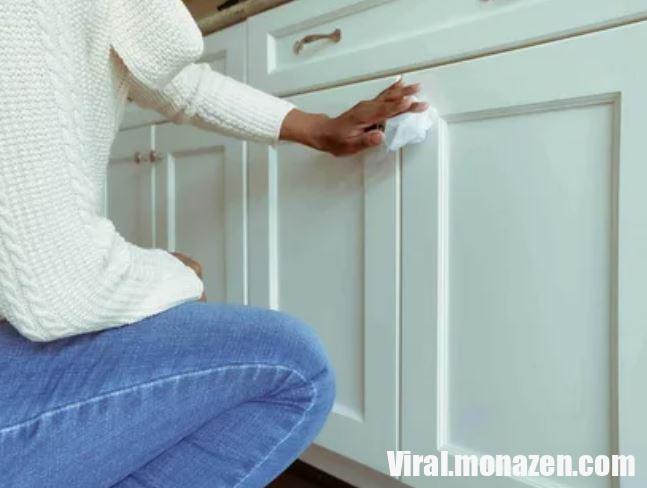
- Wipe the cabinet surface gently.
- Immediately follow with a dry microfiber cloth.
In most cases, the grease lifts instantly.
No scrubbing. No fumes. No residue.
Why This Works Better Than Harsh Degreasers
Many commercial degreasers rely on strong alkaline agents. They work — but they can also:
- Strip wood finishes
- Damage paint over time
- Leave streaks
- Cause skin irritation
- Create strong chemical odors
Dish soap is formulated to break down oil safely. It’s designed for dishes that touch food, making it a practical and gentle solution for cabinets too.
When paired with warm water, it becomes highly effective at dissolving light-to-moderate grease buildup.
When Grease Is Heavier: Add This Simple Boost
If cabinets haven’t been cleaned in months, you may need a slightly stronger (but still safe) version.
Optional Boost Method:
- 1 cup warm water
- 1 tablespoon white vinegar
- 3 drops dish soap
Vinegar helps break down sticky residue while remaining safe for most sealed cabinet surfaces.
Important:
- Test a small hidden area first.
- Avoid soaking wood.
- Do not use on unsealed or raw wood.
The Microfiber Secret Most People Miss
The cloth matters.
Microfiber works better than paper towels because it:
- Lifts oil particles instead of smearing them
- Traps dust
- Reduces streaking
- Requires less pressure
Using the wrong cloth is often why people think “natural” methods don’t work.
How to Prevent Grease Buildup in the First Place
Cleaning is easier than deep scrubbing — if you prevent heavy buildup.
Simple Prevention Habits:
- Wipe upper cabinets once a week
- Use your range hood every time you cook
- Open a window when frying
- Keep cabinet surfaces dry
The difference between a 10-second wipe and a 30-minute scrub is consistency.
Is Baking Soda a Good Idea?
Baking soda is popular online for grease removal. It can help — but it’s slightly abrasive.
For glossy or painted cabinets, frequent scrubbing with baking soda may dull the finish over time.
Use it sparingly, and only if:
- Grease has hardened
- The surface is durable
- You test a hidden area first
For routine cleaning, warm water + dish soap is safer.
What NOT to Use on Kitchen Cabinets
To protect your cabinets long term, avoid:
- Bleach-based cleaners
- Ammonia-heavy sprays
- Steel wool
- Rough scrubbing pads
- Undiluted vinegar on wood
These may remove grease — but they can also damage finishes.
Expert Perspective: Why Simple Methods Often Work Best
Professional cleaners often emphasize a key principle:
Match the solution to the soil.
Kitchen grease is oil-based. Dish soap is specifically designed to dissolve oil.
You don’t need a stronger chemical — you need the right type of cleaning agent used properly.
Overcomplicating cleaning often leads to unnecessary cost and surface damage.
FAQ
Does this work on painted cabinets?
Yes, if they are sealed. Always use a damp (not wet) cloth and dry immediately.
Can I use this on wood cabinets?
Yes, if the wood is sealed or finished. Avoid soaking the surface.
How often should cabinets be cleaned?
Light weekly wipes prevent heavy buildup. Deep cleaning every 1–3 months is usually enough.
What about laminate cabinets?
This method works very well on laminate.
The Bigger Lesson: Most Home Problems Don’t Need Extreme Solutions
When something feels sticky or dirty, it’s tempting to assume you need a powerful product.
But in many cases, the simplest solution works best — especially when used consistently.
Warm water. A few drops of soap. The right cloth.
Ten seconds.
That’s often all it takes.