A proposal that reignited a global debate
Few political proposals in recent American history have sparked as much controversy and international attention as the call to restrict immigration based on religion. When discussions resurfaced about the idea of banning Muslims from entering the United States, political leaders, civil rights advocates, and global observers quickly responded.
At the center of the debate has been Donald Trump, whose earlier campaign proposals regarding immigration and national security generated intense debate across the political spectrum.
Although the idea first emerged during the highly polarized environment of the 2016 presidential campaign, the conversation around immigration restrictions tied to religious identity continues to echo in political discourse years later.
For supporters, the proposal represented a tough national security stance in an era of global instability. For critics, it raised profound constitutional and ethical concerns about religious freedom and discrimination.
The origins of the proposal
The concept of restricting entry into the United States based on religion first gained widespread attention during the 2016 presidential race.
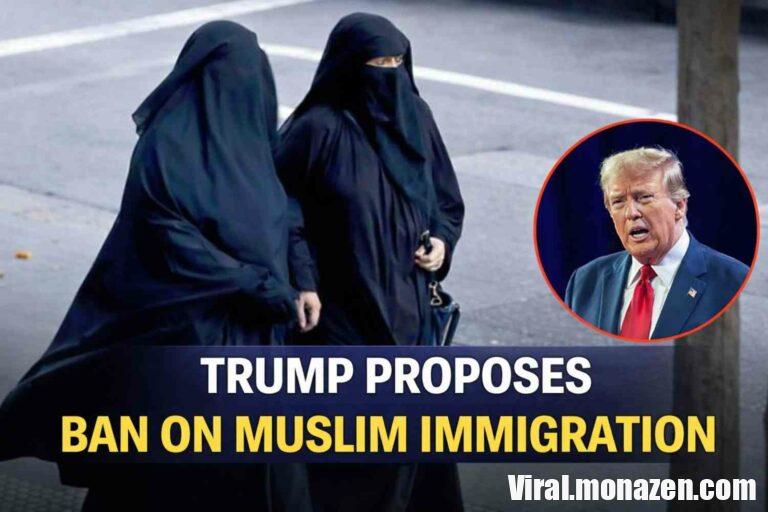
During that time, Trump proposed what he described as a “total and complete shutdown of Muslims entering the United States” until policymakers could better understand security threats. The statement immediately became one of the most widely discussed and controversial proposals of the campaign.
Supporters argued that the proposal was intended to address fears about terrorism and national security. They framed it as a temporary measure designed to allow the government to reassess immigration screening processes.
However, opponents viewed the idea as incompatible with American constitutional principles, particularly the protection of religious freedom.
Civil rights organizations, religious leaders, and many lawmakers warned that policies targeting individuals based on religion could undermine fundamental democratic values.
From campaign rhetoric to policy debates
After Trump entered the White House in 2017, immigration policy became one of the central issues of his administration.
Rather than implementing a religion-based ban, the administration introduced a series of executive orders restricting travel from several predominantly Muslim-majority countries.
These policies became widely known as the “travel ban.”
The measures initially targeted travelers from countries including Iran, Libya, Somalia, Sudan, Syria, and Yemen. Supporters said the policy was aimed at strengthening security procedures for individuals entering the country.
Critics argued that the restrictions disproportionately affected Muslim populations and therefore functioned as a de facto religious ban.
The issue eventually reached the Supreme Court of the United States, which in 2018 upheld a revised version of the travel restrictions after months of legal challenges.
Immigration and national security concerns
For many voters who supported stricter immigration policies, national security remained the primary concern.
They argued that the government has a responsibility to protect its citizens by carefully controlling who enters the country. In their view, temporary restrictions or enhanced vetting procedures were justified in response to global threats.
Advocates of stronger border policies also pointed to the complexities of modern migration systems, which involve millions of visa applications, asylum requests, and travel approvals every year.
Ensuring that security agencies have sufficient time and resources to properly screen applicants has become a key talking point in immigration debates.
However, critics counter that national security policies must still respect civil liberties and avoid broad generalizations about entire groups of people.
Constitutional questions and civil rights concerns
Opponents of religiously targeted immigration restrictions often cite the United States Constitution, which protects freedom of religion under the First Amendment.
Civil liberties groups argue that government policies should not favor or discriminate against individuals based on religious beliefs.
Organizations such as the American Civil Liberties Union and various interfaith coalitions warned that such policies could create a dangerous precedent by allowing religious identity to become a factor in immigration decisions.
Legal scholars also raised questions about whether targeting individuals based on religion could conflict with long-standing principles of equal protection under the law.
These concerns fueled a wave of protests, legal challenges, and political debates across the United States and internationally.
Global reactions to the controversy
The debate surrounding restrictions on Muslim travelers was not limited to the United States.
International leaders, humanitarian organizations, and foreign governments closely watched developments as the policies were introduced and challenged in court.
Several global leaders expressed concern that religion-based restrictions could harm diplomatic relationships and fuel tensions between cultures.
Meanwhile, human rights organizations warned that such policies might reinforce negative stereotypes and deepen divisions between communities.
At the same time, some governments quietly supported stronger border controls, particularly in response to growing migration pressures around the world.
The issue therefore became part of a broader global conversation about immigration policy and national security.
Muslim Americans respond
For many Muslim Americans, the debate carried deep emotional significance.
Community leaders emphasized that millions of Muslims live peacefully in the United States and contribute to the country’s economy, culture, and public life.
They pointed to the long history of Muslim communities in America, which includes professionals in fields ranging from medicine and technology to education and public service.
Religious leaders also stressed that the actions of extremists should not be used to define an entire faith practiced by more than a billion people worldwide.
Across the country, interfaith events and public discussions emerged as communities sought to address fears and misunderstandings.
The political legacy of the debate
Nearly a decade after the original proposal was first introduced, the issue continues to shape conversations about immigration policy.
The debate helped redefine how political candidates approach questions about national security, border control, and refugee admissions.
It also highlighted the power of campaign rhetoric to shape policy discussions long after an election ends.
For many analysts, the controversy demonstrated how immigration can become one of the most emotionally charged topics in modern politics.
The issue touches on questions of identity, security, economics, and humanitarian responsibility—making it one of the most complex policy challenges facing governments today.
Immigration policy in an evolving world
The United States remains one of the world’s largest destinations for immigrants, welcoming millions of people from diverse backgrounds over the course of its history.
At the same time, policymakers continue to face pressure to balance humanitarian commitments with security concerns.
As global conflicts, economic disparities, and climate changes reshape migration patterns, the debate over immigration policy is unlikely to disappear.
Future administrations will likely continue grappling with questions about how to design immigration systems that are both secure and consistent with democratic values.
A continuing conversation
The discussion surrounding proposals to restrict Muslim immigration reflects broader questions about how societies define security, identity, and freedom.
While political opinions remain sharply divided, the debate has encouraged deeper examination of constitutional principles and immigration policies.
For many observers, the controversy serves as a reminder that immigration policy is not simply about borders—it is also about the values a nation chooses to uphold.
As political leaders, voters, and communities continue to engage with these issues, the conversation will remain a defining feature of American public life for years to come.