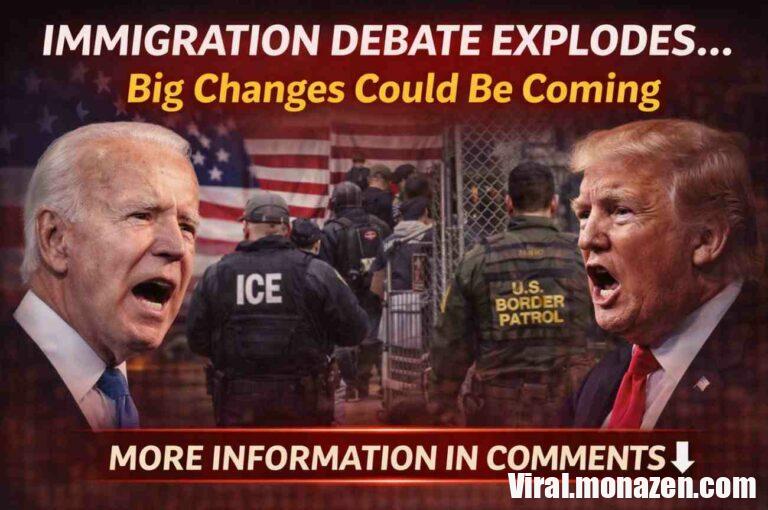
Immigration policy has once again moved to the center of political debate in the United States after remarks by Katie Britt calling for the deportation of individuals living in the country without legal status. Her comments have sparked strong reactions across the political spectrum, with supporters praising a firm stance on immigration enforcement and critics warning about humanitarian and economic consequences.
Among those responding to the proposal is Ilhan Omar, who argued that sweeping deportation policies do not reflect the priorities of many Americans. The exchange has revived longstanding national conversations about border security, immigration law, and the broader role of immigration in the country’s economic and social future.
At the heart of the debate lies a complex question: how should the United States balance enforcement of immigration laws with humanitarian concerns and economic realities?
The Proposal That Sparked the Debate
Senator Katie Britt’s remarks focused on what she described as the need to restore confidence in the country’s immigration system. According to supporters of her position, consistent enforcement of immigration laws is essential to maintaining the credibility of legal pathways for those seeking to enter the country.
Advocates of stricter enforcement argue that when immigration laws are not consistently applied, it can undermine public trust in the system and create incentives for unauthorized migration.
Proposals tied to this viewpoint often include measures such as:
- Increased funding for border security
- Expanded workplace enforcement to discourage illegal hiring
- Faster processing of immigration cases
- Clear legal consequences for immigration violations
Supporters say these policies would reinforce the rule of law while ensuring that immigration systems function as intended.
Opposition and Concerns Raised by Critics
Opponents of large-scale deportation proposals argue that the issue is far more complicated than simply enforcing existing laws.
Representative Ilhan Omar and other critics warn that deporting millions of people could create major humanitarian challenges, particularly for families with mixed immigration status.
Many undocumented immigrants have lived in the United States for years or even decades, often raising children who are American citizens.
Critics also note the logistical challenges associated with large-scale deportation operations.
Experts say such efforts could require enormous financial resources, expanded detention capacity, and extensive legal proceedings.
In addition to humanitarian concerns, opponents argue that certain sectors of the American economy rely heavily on immigrant labor.
Industries such as agriculture, construction, and hospitality frequently employ large numbers of immigrant workers.
Large-scale deportations could therefore have ripple effects throughout the economy.
A Longstanding Political Divide
Immigration has been one of the most politically divisive issues in the United States for decades.
Debates about border security, visa programs, and pathways to citizenship have shaped numerous presidential campaigns and congressional battles.
The issue gained particular prominence in recent years as migration levels fluctuated and political leaders proposed competing visions for reform.
Some lawmakers emphasize enforcement and border control as the primary priorities.
Others focus on creating pathways to legal status for undocumented immigrants who have established lives in the country.
Both perspectives reflect broader philosophical differences about how immigration policy should function in a modern economy.
The Role of Border Security
For many advocates of stricter immigration enforcement, border security is the foundation of any credible immigration system.
They argue that without effective border controls, efforts to reform immigration laws could be undermined.
Recent years have seen increased funding for border patrol operations and new technologies designed to monitor crossings.
However, migration patterns are influenced by a wide range of factors, including economic conditions, political instability, and climate-related challenges in migrants’ home countries.
As a result, experts say border enforcement alone may not fully address the underlying drivers of migration.
Economic Implications of Immigration Policy
Immigration plays a significant role in the American economy.
Research from economic institutions has shown that immigrants contribute to various industries and help fill labor shortages in certain sectors.
At the same time, debates continue about the impact of immigration on wages, housing markets, and public services.
Supporters of stricter immigration policies argue that limiting unauthorized migration could protect job opportunities and reduce strain on public resources.
Critics counter that immigrant workers often take jobs that are difficult to fill and contribute billions of dollars in taxes each year.
The economic dimension of immigration policy remains one of the most complex aspects of the debate.
Humanitarian Considerations
Beyond economics and enforcement, immigration policy also raises profound humanitarian questions.
Many migrants arrive in the United States seeking safety from violence, political persecution, or economic hardship.
International agreements and domestic laws require the United States to consider asylum claims from individuals fleeing persecution.
Balancing humanitarian obligations with enforcement priorities presents a significant challenge for policymakers.
Advocates for immigrant rights emphasize the importance of protecting vulnerable populations, including children and refugees.
Meanwhile, supporters of stricter policies argue that humanitarian programs must be carefully managed to prevent abuse of the system.
The Search for Comprehensive Reform
Despite years of debate, comprehensive immigration reform has proven difficult to achieve.
Multiple bipartisan proposals have been introduced in Congress over the past two decades, but most have stalled amid political disagreements.
Common elements in reform proposals often include:
- Modernizing the visa system
- Strengthening border security
- Providing legal pathways for certain undocumented immigrants
- Improving processing times for asylum claims
However, lawmakers frequently disagree about the balance between enforcement and legalization measures.
This disagreement has contributed to the gridlock that has defined immigration policy in Washington.
Public Opinion and the Future of the Debate
Public opinion on immigration tends to shift depending on economic conditions, political rhetoric, and migration trends.
Polls often show that Americans support both stronger border security and some form of legal status for long-term undocumented residents.
This combination of views reflects the complexity of the issue.
Many voters express concern about unauthorized migration while also recognizing the contributions immigrants make to American society.
As a result, political leaders face pressure to find solutions that address both priorities.
A Defining Issue for American Politics
The renewed debate sparked by the exchange between Katie Britt and Ilhan Omar illustrates how immigration continues to shape the national conversation.
For some lawmakers, the focus remains on enforcing existing laws and strengthening border security.
For others, the priority is creating a more flexible and humane immigration system that reflects modern realities.
As the United States continues to grapple with these questions, immigration policy will likely remain a central issue in political campaigns and legislative battles.
Ultimately, the challenge facing policymakers is finding a path forward that balances law enforcement, economic needs, and humanitarian values.
And as the debate continues, Americans across the political spectrum are likely to remain deeply engaged in shaping what the country’s immigration system should look like in the years ahead.