
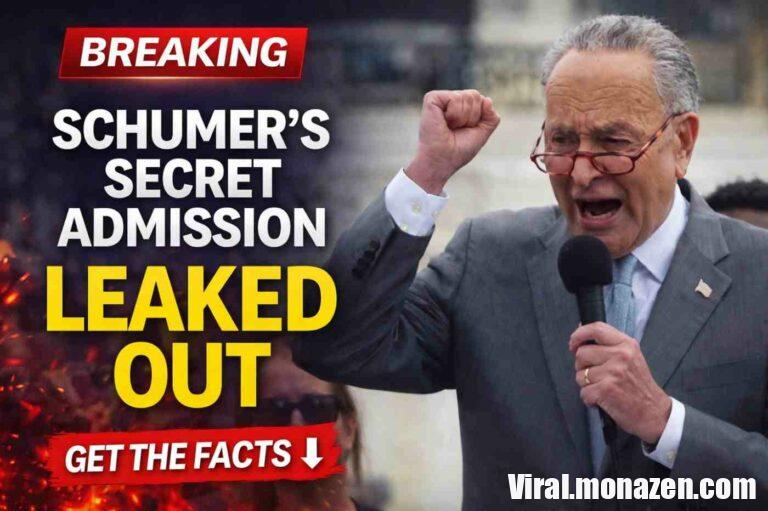
A political battle over voting laws in the United States is intensifying as lawmakers clash over the proposed Safeguard American Voter Eligibility Act, widely known as the SAVE Act. Supporters of the legislation argue that it would strengthen election security by requiring proof of U.S. citizenship to register to vote in federal elections. Critics, including Senate Majority Leader Chuck Schumer, warn that the measure could disenfranchise millions of eligible voters.
The debate reflects broader national divisions over election integrity, voting access, and the future of U.S. election law.
What the SAVE Act Proposes
The SAVE Act would require individuals registering to vote in federal elections to provide documentary proof of U.S. citizenship, such as a birth certificate, passport, or other official records verifying citizenship status.
Proponents say the bill addresses concerns about the possibility of non-citizens appearing on voter rolls. Under current federal law, non-citizens are prohibited from voting in federal elections, and individuals registering to vote must attest under penalty of law that they are citizens. However, the SAVE Act’s supporters argue that additional verification measures are necessary to prevent potential loopholes.
Republican lawmakers backing the bill say the legislation is designed to restore public confidence in election systems and ensure that only eligible citizens participate in federal elections.
“This is about protecting the integrity of our elections,” one Republican supporter of the bill said during recent debate in Congress. “Voting is a fundamental right reserved for American citizens, and our systems should ensure that requirement is enforced.”
Schumer’s Strong Opposition
Senator Chuck Schumer has emerged as one of the bill’s most prominent critics. The Senate Majority Leader has warned that requiring documentary proof of citizenship could create new barriers for voters who may not have immediate access to such documents.
Schumer has described the legislation as unnecessary and potentially harmful, arguing that existing laws already prohibit non-citizen voting and that widespread voter fraud involving non-citizens has not been demonstrated by evidence.
In remarks criticizing the proposal, Schumer compared the legislation to historical voting restrictions that disproportionately affected marginalized communities. He argued that requiring additional documentation could make it more difficult for some Americans to participate in elections.
Supporters of the SAVE Act strongly reject that characterization. They argue that verifying citizenship status is a basic administrative step similar to identification requirements used in many everyday activities.
Election Integrity Versus Voting Access
The dispute over the SAVE Act highlights a central tension in American election policy: how to balance election security with voter accessibility.
Advocates of stricter verification measures argue that clear rules and documentation requirements can strengthen confidence in election outcomes.
They point to surveys showing that a portion of the American public remains concerned about election integrity. Supporters of the SAVE Act believe that adding proof-of-citizenship requirements could help reassure voters that elections are secure.
Opponents, however, say that the focus on stricter rules risks creating barriers that could discourage legitimate voters from participating.
Voting rights groups argue that millions of Americans—particularly older citizens, rural residents, and low-income individuals—may not have ready access to documents such as passports or certified birth certificates.
In some cases, obtaining such documentation can involve fees or administrative hurdles, critics say.
The Scale of the Issue
One of the most contentious aspects of the debate involves the question of how many individuals could be affected by the SAVE Act.
Supporters of the bill argue that the measure would help prevent non-citizens from appearing on voter rolls. Critics counter that there is little evidence of widespread non-citizen voting in federal elections.
Research conducted by election experts has generally found that cases of non-citizen voting are extremely rare.
However, proponents of the legislation argue that even a small number of improper registrations could undermine public trust in election systems.
“This is about maintaining confidence,” one supporter of the bill said. “Even the perception of vulnerability can damage faith in our elections.”
Political Messaging and Public Perception
The SAVE Act debate has also become a powerful messaging tool for both political parties.
Republicans have framed the bill as a common-sense measure to ensure that elections are decided only by eligible citizens.
Democrats have characterized the proposal as part of a broader trend of voting restrictions that could make it harder for certain groups to vote.
The political rhetoric surrounding the bill reflects the broader polarization of election-related issues in recent years.
Election laws, once largely administrative matters, have increasingly become high-profile political battlegrounds.
Historical Context of Voting Laws
The debate over voter verification requirements has a long history in the United States.
Over the past two decades, several states have implemented voter identification laws requiring individuals to present identification at polling places.
Supporters of those laws argue they prevent fraud and strengthen public trust in elections.
Critics argue they can disproportionately affect voters who may have difficulty obtaining identification.
The SAVE Act represents a different approach by focusing specifically on citizenship verification during voter registration.
While some states have attempted similar policies in the past, federal legislation mandating such requirements would represent a significant shift in election administration.
What Happens Next
The future of the SAVE Act remains uncertain.
While the bill has strong support among many Republican lawmakers in the House of Representatives, its prospects in the Senate are less clear.
Legislation affecting voting laws often faces intense scrutiny and debate, particularly when it involves federal election procedures.
If the bill advances, lawmakers may propose amendments addressing concerns about access to documentation or establishing alternative verification processes.
Election experts say that any major change to voter registration procedures would require careful implementation to avoid unintended consequences.
A Debate Likely to Continue
The clash over the SAVE Act underscores the enduring importance of voting laws in American political life.
For supporters, the legislation represents a necessary step to protect election integrity and ensure that only citizens vote in federal elections.
For critics, the proposal raises concerns about potential barriers that could make it harder for eligible voters to participate.
As lawmakers continue debating the issue, the broader question remains unresolved: how to maintain both strong election security and wide voter participation in a diverse and complex democracy.
With national elections always on the horizon, the discussion surrounding the SAVE Act is likely to remain at the forefront of political debate in Washington.
And as the country continues to grapple with competing visions of how elections should be conducted, the outcome of that debate may shape the future of American voting laws for years to come.