
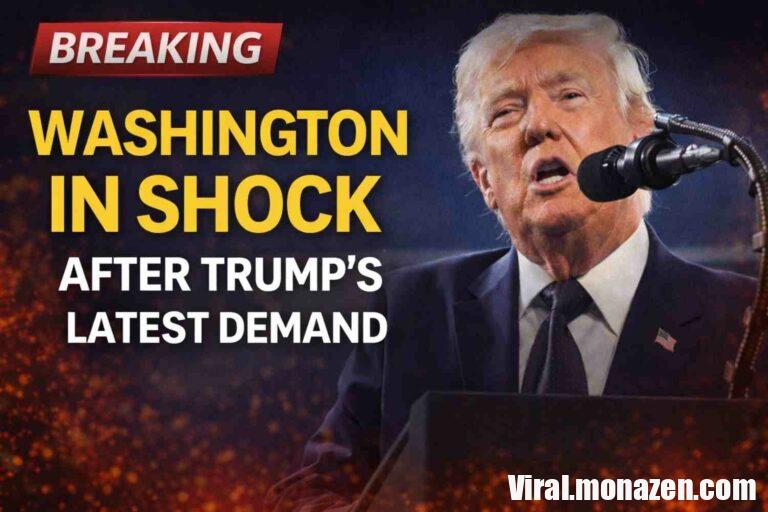
The debate over immigration enforcement, border security, and the role of federal law enforcement has once again moved to the center of American politics. Former President Donald Trump, speaking during remarks in Miami, praised federal immigration officers and border agents while urging Democratic lawmakers to vote immediately to reopen the Department of Homeland Security (DHS), which has been partially shut down amid a political standoff over funding and reforms.
Trump’s comments come at a tense moment in Washington, where disagreements over immigration policy, policing practices, and federal oversight have contributed to a broader dispute that has disrupted operations within DHS and heightened partisan tensions on Capitol Hill.
The former president framed the issue as one of national security, arguing that delaying funding for the department could undermine efforts to protect the country’s borders and maintain law enforcement operations.
Praising Federal Immigration Officers
During his remarks, Trump highlighted what he described as the extraordinary challenges faced by agents from U.S. Immigration and Customs Enforcement (ICE), U.S. Border Patrol, and other federal law enforcement agencies tasked with enforcing immigration laws.
He emphasized the difficult and often dangerous conditions under which officers operate, describing their work as both physically demanding and politically controversial.
“What ICE has to endure is incredible,” Trump said, according to reports from the event. “The hardships they face, the criticism they face, and the work they do every single day to protect this country deserve respect.”
Trump also extended praise to border patrol agents and other federal officers who monitor the nation’s southern border, calling them “some of the toughest and most dedicated people in government.”
For many of his supporters, immigration enforcement agencies represent a central pillar of national security policy. Throughout his presidency, Trump consistently argued that strengthening border enforcement and expanding immigration policing were necessary steps to maintain public safety.
A Political Fight Over DHS Funding
Trump’s remarks were delivered against the backdrop of an ongoing political dispute that has resulted in a partial shutdown of the Department of Homeland Security.
The standoff stems from disagreements between Republican and Democratic lawmakers over funding levels, policy priorities, and calls for reform within federal law enforcement agencies.
Democratic lawmakers have demanded changes within DHS following a controversial incident in Minneapolis, where two individuals were killed during an encounter with federal officers. The incident sparked protests and renewed calls for accountability and oversight within federal enforcement agencies.
Some Democratic leaders have argued that the department should undergo structural reforms before additional funding is approved.
Republican lawmakers, however, have rejected those demands, saying that withholding funding risks weakening national security and undermining the work of federal officers.
Trump echoed that argument in his Miami remarks, urging Democratic lawmakers to approve funding immediately.
“Democrats must vote right away to reopen the Department of Homeland Security,” he said. “We need the resources to keep America safe.”
Leadership Changes at DHS
The dispute over DHS funding comes shortly after Trump announced a leadership change within the department.
Less than a week earlier, he revealed that Senator Markwayne Mullin, a Republican from Oklahoma, would be nominated to serve as Secretary of Homeland Security following the dismissal of former Secretary Kristi Noem.
The move surprised many political observers, as Noem had been a prominent figure within conservative political circles and had previously been considered a close ally of Trump.
While the reasons for her removal have not been fully detailed publicly, the decision has fueled speculation about internal disagreements over policy direction and management within the department.
Mullin, known for his strong support of immigration enforcement and border security initiatives, is expected to face a confirmation process that could become another flashpoint in the broader immigration debate.
Immigration Policy at the Center of Political Debate
The conflict over DHS funding highlights how immigration policy continues to dominate the national political landscape.
Since the early 2010s, immigration enforcement and border security have become defining issues in American politics, shaping elections, legislative battles, and public opinion.
Trump’s presidency was particularly marked by an aggressive approach to immigration enforcement, including policies such as expanded deportation operations, restrictions on asylum claims, and increased border infrastructure.
Supporters of these policies argue they helped restore control over the U.S. immigration system and deter illegal crossings.
Critics, however, say some of the measures were overly harsh and failed to address the humanitarian aspects of migration.
The current dispute reflects the same fundamental divide: one side prioritizes strict enforcement and border security, while the other emphasizes oversight, accountability, and immigration reform.
The Impact of a Partial Shutdown
Although the Department of Homeland Security continues to operate many critical functions during the shutdown, funding disruptions can create operational challenges.
Essential employees—including border patrol agents, TSA officers, and other security personnel—often continue working without pay during shutdown periods until funding is restored.
Past shutdowns have demonstrated how prolonged funding disputes can strain morale within federal agencies and create uncertainty for workers responsible for national security tasks.
Transportation security operations, disaster response programs, and immigration processing can all be affected when DHS funding becomes entangled in political conflicts.
Security experts often warn that prolonged shutdowns could potentially weaken operational readiness in certain areas, even if core missions continue.
Public Reaction and Political Messaging
Trump’s remarks in Miami quickly circulated across social media platforms and news outlets, prompting reactions from both supporters and critics.
Supporters praised his strong defense of immigration officers and his call to restore funding for DHS.
Some conservative commentators argued that withholding funding from law enforcement agencies during a period of global instability could create unnecessary risks.
Democratic leaders, however, have pushed back against the framing of the debate, saying their concerns center on accountability and responsible oversight of federal agencies.
They argue that reform efforts should not be dismissed as partisan politics but viewed as part of a broader effort to improve transparency and trust within law enforcement institutions.
A Broader National Conversation
The dispute over DHS funding reflects a larger national conversation about the role of federal agencies, law enforcement practices, and immigration policy.
For many Americans, border security remains a top concern, particularly in regions directly affected by migration patterns and cross-border activity.
At the same time, calls for reform within federal agencies have gained momentum in recent years, particularly after high-profile incidents involving law enforcement actions.
Balancing these competing priorities—security and accountability—remains one of the most difficult challenges facing policymakers.
What Comes Next
As negotiations over DHS funding continue, lawmakers from both parties face pressure to reach a resolution that restores full operations while addressing the concerns that sparked the shutdown.
Whether through a temporary funding agreement or a broader legislative compromise, the outcome will likely influence the direction of immigration policy debates in the months ahead.
Trump’s comments in Miami signal that immigration enforcement will remain a central theme in political discussions, particularly as lawmakers grapple with questions about border security, federal oversight, and national priorities.
For now, the future of DHS funding—and the broader debate over immigration policy—remains uncertain.
But one thing is clear: the issues surrounding border enforcement and homeland security will continue to shape the political landscape in Washington for the foreseeable future.