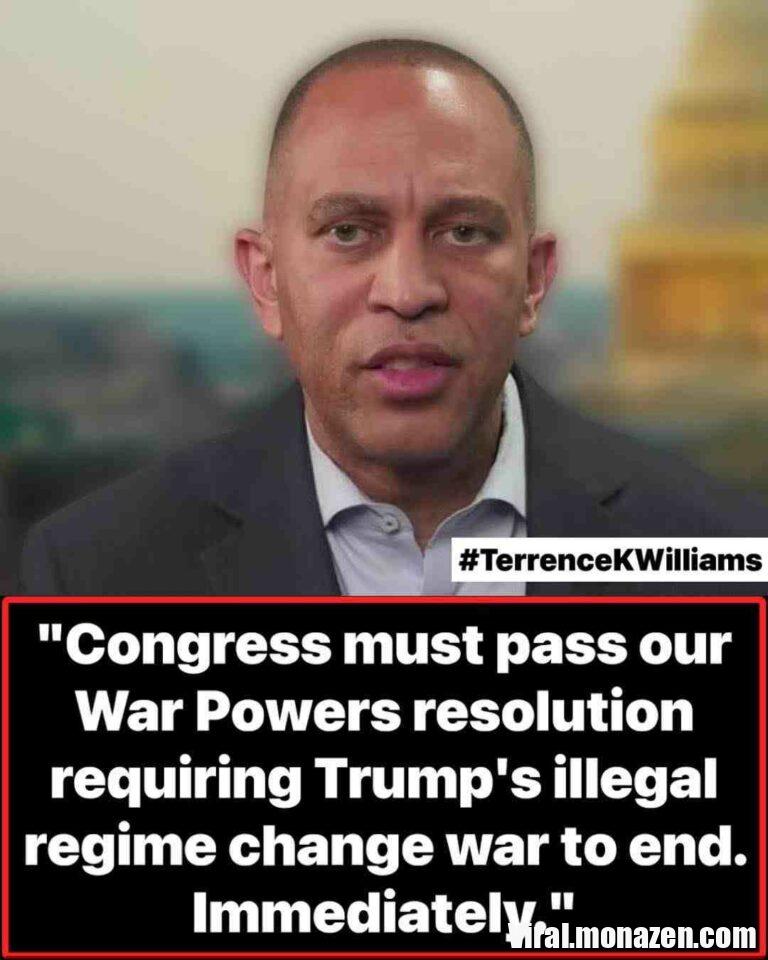
“Congress Must Act Now”: The Explosive Call to End Trump’s ‘Illegal Regime Change War’
In recent days, a powerful political message has been circulating widely online:
“Congress must act now.”
The statement calls for lawmakers to pass a War Powers Resolution to end what critics describe as an “illegal regime change war” connected to former President Donald Trump’s policies.
The language is strong.
The debate is intense.
But behind the headline lies a deeper constitutional question that goes beyond party politics.
This is ultimately about the balance of power in a democracy.
Why This Headline Is Getting So Much Attention
Words like Congress, war, and illegal immediately capture attention.
They signal urgency.
They suggest conflict — not only internationally, but institutionally.
Many people are asking:
- Who decides when military force is used?
- Can Congress stop military action?
- What exactly is a War Powers Resolution?
- And what does “regime change” really mean?
Understanding these questions helps move the conversation from emotional reaction to informed discussion.
What Is a War Powers Resolution?
A War Powers Resolution is a legislative tool designed to limit a president’s ability to engage in prolonged military action without congressional approval.
In simple terms:
- The president can deploy military forces.
- But Congress has the constitutional authority to declare war.
- If military involvement continues beyond a certain period, Congress can require authorization or demand withdrawal.
This system exists to create balance between executive power and legislative oversight.
It is not new.
It has been debated under multiple administrations.
The Meaning Behind “Regime Change”
The phrase “regime change” refers to efforts aimed at replacing a foreign government’s leadership.
Historically, this term has been used in discussions about military intervention or foreign policy strategies intended to alter political leadership in another country.
Because such actions can lead to long-term consequences, the phrase carries emotional weight.
It raises questions about:
- Duration of involvement
- Global stability
- Diplomatic relationships
- Economic impact
For many citizens, those concerns feel personal.
The Core Issue: Executive Power vs. Congressional Authority
At the heart of the debate is a constitutional tension.
The president serves as commander-in-chief of the military.
Congress holds the power to declare war.
Over time, military engagements have often occurred without formal declarations of war. Instead, they proceed under authorizations or executive authority.
Some lawmakers argue this shifts too much power to the executive branch.
Others argue that modern global threats require rapid presidential response.
This push for Congress to “act now” reflects that ongoing institutional debate.
How Congress Could Respond
If lawmakers choose to move forward with a War Powers Resolution, the process typically involves:
- Drafting a formal resolution
- Committee review and discussion
- Public debate in both chambers
- A vote
- Possible presidential approval or veto
Even if passed, the president can veto the resolution. Overriding that veto requires a supermajority vote.
This layered process ensures that major military decisions are debated openly.
Why These Debates Happen Repeatedly
War powers disputes are not unique to one administration.
Throughout modern political history, Congress has periodically reasserted its authority after periods of expanded executive action.
This cycle reflects how democracies adjust to changing global conditions.
It is part of institutional checks and balances.
While debates may appear dramatic, they are often signs of democratic engagement rather than instability.
Common Misunderstandings
When political headlines spread quickly, clarity sometimes gets lost.
Here are a few key points to remember:
- A War Powers Resolution does not automatically end military action instantly.
- The word “illegal” in political debate does not always reflect a final court ruling.
- War powers disputes have occurred under leaders from different political parties.
- Military policy decisions often involve complex international agreements.
Understanding nuance reduces unnecessary polarization.
Why This Moment Feels Different
What makes this moment stand out is the urgency in the language.
“Must act now.”
“Illegal regime change war.”
Strong phrasing amplifies emotional reactions.
And in the age of social media, emotionally charged statements spread rapidly.
But behind the intensity is a deeper civic conversation:
How should power be shared in matters of war?
That question is as old as constitutional democracy itself.
Frequently Asked Questions
Can Congress actually stop military action?
Congress can pass legislation limiting or requiring authorization for military involvement. However, the process involves debate, votes, and potential executive response.
Has this happened before?
Yes. War powers disputes have arisen multiple times across different administrations.
What does “regime change” legally mean?
It is a political term describing efforts to replace foreign leadership. Legal interpretations depend on specific statutes and constitutional review.
Why is this debate important?
Because it concerns constitutional authority, institutional balance, and the long-term role of legislative oversight.
Final Thoughts
The headline may be dramatic.
But the underlying issue is not new.
This is a constitutional discussion about authority, accountability, and institutional balance.
Whether one agrees or disagrees with the current call for action, the broader principle remains essential:
In democratic systems, power is designed to be shared, debated, and reviewed.
Strong opinions will continue.
Debate will continue.
But informed understanding helps ensure that conversations remain thoughtful rather than reactive.
And in moments like this, clarity matters more than volume.