
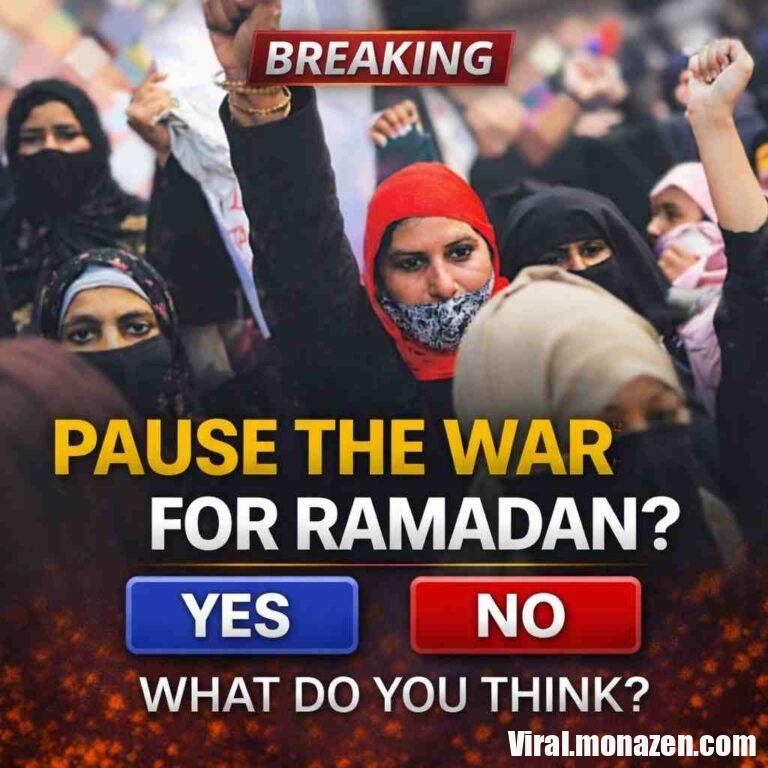
As tensions surrounding the conflict involving Iran continue to dominate international headlines, a new dimension has entered the conversation—religion. A growing number of Muslim activists and community leaders have publicly called on former U.S. President Donald Trump and other political figures to support a pause in military operations during the Islamic holy month of Ramadan.
The appeal, rooted in religious observance and humanitarian concerns, has sparked debate across political, diplomatic, and cultural circles. Supporters say such a pause would demonstrate respect for one of the most sacred periods in the Muslim calendar, while critics argue that military strategy and national security decisions cannot be dictated by religious timelines.
The discussion highlights how faith, geopolitics, and public opinion can intersect during periods of conflict.
Ramadan: A Month of Reflection and Spiritual Renewal
For Muslims around the world, Ramadan is one of the most significant times of the year. The month, which follows the lunar Islamic calendar, is marked by fasting from dawn to sunset, increased prayer, acts of charity, and spiritual reflection.
Many Muslims view Ramadan as a period devoted to peace, self-discipline, and reconciliation. During this time, families gather for evening meals known as iftar, mosques host extended nightly prayers called taraweeh, and charitable giving often increases significantly.
Because of these traditions, some Muslim organizations believe ongoing military activity during the holy month creates tension between religious observance and global conflict.
Activists making the appeal argue that halting military operations temporarily would allow communities to focus on the spiritual significance of Ramadan without the added weight of war-related developments dominating news cycles and public attention.
Activists Call for a Temporary Pause
The call for a pause in military operations has emerged from various Muslim advocacy groups and activists who believe that symbolic gestures of respect can play an important role in diplomacy and global relations.
Some argue that the timing of the conflict—occurring close to or during Ramadan—adds sensitivity for Muslim communities worldwide.
“These weeks are meant for prayer, compassion, and reflection,” one activist said in public comments circulated online. “A temporary pause could send a message that religious traditions are respected even in times of geopolitical tension.”
Supporters of the idea point out that throughout history, temporary ceasefires during religious holidays have occasionally been used as gestures of goodwill or as openings for diplomatic discussions.
They believe that a similar approach during Ramadan could reduce tensions and potentially create space for negotiations or humanitarian efforts.
A Complex Diplomatic Question
While the proposal may resonate with religious communities, foreign policy analysts note that military decisions rarely follow symbolic timelines alone.
Governments typically base strategic decisions on intelligence assessments, security needs, and geopolitical calculations rather than religious observances.
Experts emphasize that while religious considerations can influence diplomacy, they rarely override national security priorities.
“Military operations are determined by strategic objectives, not calendar dates,” said one analyst specializing in Middle East policy. “That said, symbolic gestures sometimes play a role in shaping international perception and diplomacy.”
In other words, even if a full pause in military operations were unlikely, messaging around the issue could still carry political significance.
Historical Precedents for Religious Ceasefires
The idea of pausing conflicts during religious holidays is not entirely new.
Throughout history, temporary ceasefires have occurred during significant religious events. One of the most well-known examples is the Christmas Truce of 1914 during World War I, when soldiers from opposing sides briefly halted fighting.
In the Middle East and other regions, ceasefires or humanitarian pauses have occasionally been discussed during religious holidays such as Ramadan, Easter, or other major observances.
However, such pauses are rarely guaranteed and often depend on cooperation from all parties involved in a conflict.
In modern warfare, especially in conflicts involving multiple actors and complex alliances, coordinating a pause can be difficult.
Political Reactions and Divided Opinions
Public reaction to the calls for a Ramadan pause has been mixed.
Some people see the proposal as a respectful acknowledgment of religious traditions that could improve relations between Western governments and Muslim communities.
Others believe military policy should remain separate from religious considerations.
Supporters of the idea argue that showing sensitivity toward faith traditions could help reduce perceptions of cultural hostility or misunderstanding.
Critics, on the other hand, contend that adversaries in conflict zones do not always follow the same religious or diplomatic norms, making unilateral pauses potentially risky.
This divide reflects broader debates about how religion should intersect with international policy decisions.
Domestic Political Implications
Within the United States, discussions about Middle East policy frequently intersect with domestic politics.
Statements from political figures—whether current officials or former leaders like Trump—can influence how the public interprets foreign policy decisions.
Political observers note that debates surrounding conflicts in the Middle East often become part of larger discussions about national security, diplomacy, and international alliances.
The Ramadan pause proposal has therefore become another topic within an already complex political landscape.
Some commentators see the request as part of broader advocacy efforts aimed at encouraging diplomatic solutions to international conflicts.
Others frame it as an example of how global events can become deeply intertwined with cultural and religious considerations.
Broader Questions About Religion and Global Politics
Beyond the immediate issue of military strategy, the conversation about a Ramadan pause raises deeper questions about the role of religion in global affairs.
Religion continues to shape political identity, cultural values, and diplomatic relationships in many parts of the world.
In international relations, leaders often must navigate the balance between respecting cultural traditions and maintaining strategic priorities.
In some cases, symbolic gestures—such as acknowledging religious holidays or traditions—can play a role in diplomacy.
In others, geopolitical realities make such gestures difficult to implement.
The debate surrounding the Ramadan pause reflects this ongoing balancing act.
The Human Impact of Conflict
Regardless of political positions, discussions about war often return to a central concern: the human impact.
Conflicts in the Middle East have long had far-reaching consequences for civilians, families, and communities across the region.
Humanitarian organizations frequently call for pauses or ceasefires during conflicts to allow aid deliveries, evacuations, and medical assistance.
While the current discussion is framed around religious observance, the broader humanitarian implications remain an important part of the conversation.
Many advocates hope that even symbolic pauses could reduce suffering or open pathways to dialogue.
A Debate Likely to Continue
As Ramadan approaches or unfolds, calls for a pause in military activity may continue to circulate among activists, political commentators, and community leaders.
Whether such proposals influence policy decisions remains uncertain.
However, the debate itself highlights how deeply interconnected religion, politics, and global conflict have become.
For millions of Muslims observing Ramadan, the month represents a time for reflection, compassion, and spiritual growth.
For policymakers navigating international tensions, it represents another complex factor in an already challenging diplomatic landscape.
The discussion surrounding a Ramadan pause serves as a reminder that even in an era defined by geopolitical strategy, cultural and religious traditions continue to shape how people around the world interpret global events.
And in a world where conflicts often dominate headlines, the conversation about faith, respect, and diplomacy is likely to remain part of the broader dialogue.