
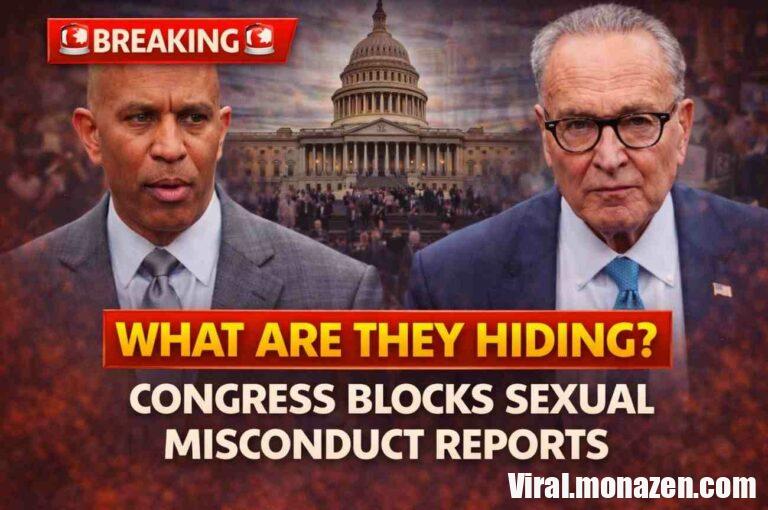
A recent vote in the United States House of Representatives has sparked renewed debate about transparency and accountability in Washington. Lawmakers voted overwhelmingly—357 to 65—to block the immediate public release of records related to sexual misconduct allegations involving members of Congress, instead sending the proposal to the House Ethics Committee for further review.
While the procedural move may appear routine on the surface, critics argue it effectively delays or potentially halts the disclosure of sensitive reports that some believe should be made public. Supporters of the decision, however, insist that handling such matters through established ethics procedures is necessary to protect due process and ensure fairness.
The vote has quickly become a flashpoint in the broader political conversation about transparency, ethics, and how Congress investigates allegations involving its own members.
The Vote That Sparked Controversy
The measure at the center of the controversy sought to make public certain reports related to allegations of sexual misconduct involving sitting or former members of Congress.
When the proposal reached the House floor, lawmakers from both parties overwhelmingly supported sending it to the House Ethics Committee, the body responsible for investigating ethical violations by members of the chamber.
The final tally—357 in favor and 65 opposed—demonstrated rare bipartisan agreement in an otherwise deeply divided Congress.
But the decision to refer the matter to the Ethics Committee rather than release the records immediately has drawn criticism from advocacy groups and political commentators who argue the move could delay transparency.
In Washington, procedural decisions often carry significant political consequences, and referring a proposal to committee can sometimes effectively stall legislation indefinitely.
Critics Question the Decision
Those critical of the vote argue that the public has a right to know how allegations of misconduct within Congress have been handled.
Over the past decade, concerns about harassment and abuse of power in workplaces—including government institutions—have prompted calls for greater transparency and accountability.
Critics say that when lawmakers vote to limit access to information about misconduct allegations, it risks undermining public trust.
For them, the question is straightforward: if Congress demands transparency from other institutions, why should its own members be shielded from scrutiny?
Advocates for disclosure say making such reports public could help ensure victims are taken seriously and that lawmakers are held accountable if misconduct occurs.
Supporters Emphasize Due Process
Supporters of the vote argue that the issue is more complicated than critics suggest.
They note that allegations of misconduct—particularly those that have not been fully investigated—can carry serious reputational consequences.
Referring the issue to the Ethics Committee, they say, allows trained investigators to examine the records carefully before any decisions about public disclosure are made.
In their view, releasing incomplete or unverified information could unfairly damage individuals who may ultimately be cleared of wrongdoing.
The Ethics Committee has established procedures designed to evaluate allegations, gather evidence, and determine whether disciplinary action is warranted.
Supporters say that following those procedures protects both potential victims and the rights of those accused.
The Role of the Ethics Committee
The House Ethics Committee is one of the most powerful oversight bodies within Congress.
Unlike most committees, it is evenly divided between Democrats and Republicans and operates under strict confidentiality rules.
Its responsibilities include investigating allegations of misconduct, recommending disciplinary actions, and maintaining ethical standards for members of the House.
However, the committee has often been criticized for operating largely behind closed doors.
Because many of its investigations remain confidential until conclusions are reached, critics argue that the process can appear opaque to the public.
Supporters counter that confidentiality allows witnesses to come forward without fear and prevents premature public judgments.
Transparency Versus Privacy
The debate surrounding the vote highlights a longstanding tension in government oversight: balancing transparency with privacy and fairness.
On one hand, transparency advocates argue that elected officials—who hold positions of public trust—should be subject to the highest levels of accountability.
On the other hand, legal experts caution that releasing unverified allegations could violate principles of due process and potentially expose individuals to reputational harm.
In cases involving sexual misconduct, the issue becomes even more sensitive.
Victims may be reluctant to come forward if they fear their identities or experiences could become public before investigations are complete.
A Broader Conversation About Accountability
The controversy also reflects a broader national conversation about accountability within powerful institutions.
Since the rise of the #MeToo movement, workplaces across industries—including politics—have faced pressure to address allegations of harassment and abuse more transparently.
Congress itself has undergone several reforms aimed at improving how such allegations are handled.
In recent years, lawmakers have updated policies governing workplace conduct and changed procedures related to settlements involving harassment claims.
Yet critics argue that more reforms may still be needed.
Bipartisan Dynamics in the Vote
One notable aspect of the vote was its bipartisan nature.
Members from both major parties supported sending the measure to the Ethics Committee, suggesting that concerns about process and confidentiality were shared across ideological lines.
The coalition of supporters included 182 Democrats and 175 Republicans, illustrating how institutional considerations can sometimes override partisan divisions.
Meanwhile, the smaller group of lawmakers who voted against the motion argued that immediate transparency would better serve the public interest.
Public Reaction
The vote quickly attracted attention on social media and political commentary platforms, where it became a topic of heated debate.
Some commentators accused Congress of protecting its own members at the expense of transparency.
Others defended the decision as a responsible approach to handling sensitive allegations.
Public trust in government institutions has been a persistent challenge in recent years, and controversies like this often intensify those concerns.
Whether the Ethics Committee ultimately releases more information about the allegations could influence how the public views the outcome.
What Happens Next?
With the matter now in the hands of the Ethics Committee, the next steps remain uncertain.
The committee may choose to review the records and determine whether any information should be released publicly.
Alternatively, it could conclude that existing confidentiality rules should remain in place.
Ethics investigations in Congress can take months—or even years—to resolve, particularly when complex legal and privacy issues are involved.
For now, the vote has ensured that the conversation about transparency in Congress will continue.
A Test for Congressional Credibility
Ultimately, the controversy surrounding the vote underscores a central challenge facing lawmakers: maintaining public confidence while navigating the legal and ethical complexities of investigating misconduct.
Whether Congress can strike the right balance between transparency and fairness remains an open question.
For many Americans, the issue goes beyond a single vote.
It reflects deeper concerns about how institutions hold themselves accountable—and whether those entrusted with power are willing to apply the same standards to themselves that they demand of others.
As the Ethics Committee begins its work, the outcome could shape not only the future of this particular controversy but also the broader debate about accountability in the halls of Congress.