
A moment that has captured global attention
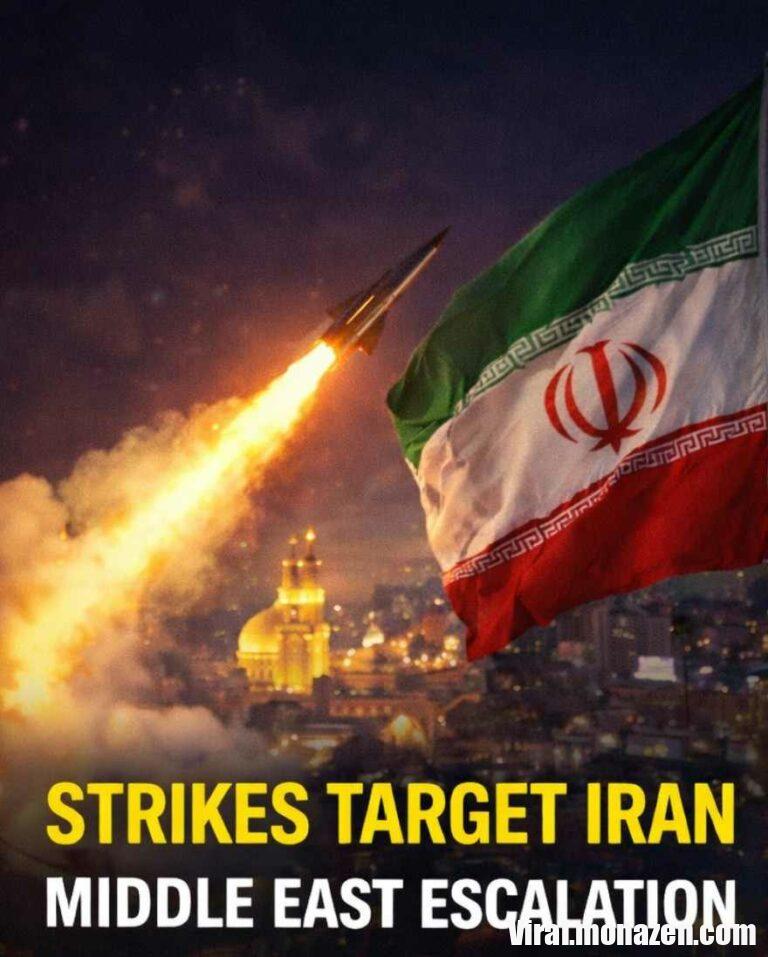
The Middle East has once again found itself at the center of global concern following reports of coordinated military strikes targeting locations inside Iran. The developments have intensified fears that the already fragile security situation in the region could move toward a broader and more dangerous confrontation.
Over the past several days, satellite imagery, regional reports, and statements from officials have suggested that multiple sites connected to Iranian military infrastructure were struck in what appears to be a carefully planned operation. Although details remain limited, the incident has triggered immediate reactions from governments, analysts, and markets around the world.
For many observers, the latest developments represent not just an isolated military event but another chapter in a long-running geopolitical struggle that has shaped the Middle East for decades.
Strategic targets and military signaling
According to early assessments from defense analysts, the sites targeted in the strikes appear to be associated with Iran’s military capabilities and strategic defense systems.
Military operations of this nature often serve multiple purposes. Beyond their immediate tactical objectives, they frequently carry a broader strategic message. By targeting infrastructure tied to military assets rather than civilian areas, such strikes can signal deterrence or warning without immediately escalating into full-scale conflict.
However, the line between limited military signaling and broader confrontation can be extremely thin.
Iran has consistently warned that attacks on its territory would be viewed as direct acts of aggression. Past incidents in the region have demonstrated how quickly cycles of retaliation can emerge once military force is introduced into the equation.
Iran’s role in regional dynamics
Iran occupies a central position in the Middle East’s political and security landscape. With a population of more than 85 million people and a powerful military structure, the country holds significant influence across several parts of the region.
Over the years, Iran has developed relationships with various political and military groups across neighboring countries. These alliances have often played a role in shaping conflicts and political movements across the Middle East.
Supporters of Iran’s regional strategy argue that these relationships strengthen defensive capabilities and counterbalance rival powers. Critics, however, say they contribute to instability and prolong existing conflicts.
Because of this complex network of alliances and rivalries, military developments involving Iran often have consequences that extend far beyond its borders.
Global concerns over escalation
International leaders have reacted cautiously to the reports of strikes. Governments in Europe, Asia, and North America have called for restraint from all sides while urging diplomatic channels to remain open.
Diplomacy in moments like these can be difficult. Political leaders must navigate competing pressures — including domestic political expectations, military considerations, and international alliances.
Historically, crises in the Middle East have sometimes moved quickly from isolated incidents to broader regional confrontations. For this reason, diplomats often emphasize the importance of avoiding actions that could trigger rapid escalation.
Global organizations and foreign ministries are now closely monitoring the situation to determine whether further developments are likely.
Energy markets and economic impact
Beyond its geopolitical implications, the situation has also drawn attention from financial markets and energy analysts.
The Middle East plays a crucial role in global energy supply. A significant portion of the world’s oil exports travels through the Strait of Hormuz, a narrow maritime passage that lies along Iran’s southern coast.
Whenever tensions rise in this region, markets tend to react quickly.
Investors worry that conflict could disrupt shipping routes or threaten key energy infrastructure. Even the possibility of such disruptions can cause fluctuations in oil prices and influence inflation across global economies.
In the hours following the reports of strikes, analysts noted increased volatility in energy markets as traders attempted to assess the potential consequences of further escalation.
Information challenges in modern conflicts
Another important factor shaping public understanding of the situation is the speed at which information spreads in the digital age.
Satellite imagery, social media posts, and amateur videos often appear online within minutes of major events. While these sources can provide valuable insights, they can also lead to confusion or misinformation when shared without proper verification.
Journalists and security analysts now rely heavily on open-source intelligence methods to analyze satellite data, geolocation clues, and visual evidence. However, even these techniques require time to confirm details accurately.
In fast-moving geopolitical crises, early reports frequently evolve as new information becomes available.
For readers and viewers following the story, this means that initial headlines rarely represent the complete picture.
Military strategy in a shifting landscape
Defense experts note that the strikes also highlight the changing nature of military strategy in the region.
Modern warfare increasingly involves precision operations designed to target specific facilities rather than broad military campaigns. Advances in missile technology, drone systems, and intelligence gathering have made such operations more feasible.
At the same time, these developments introduce new risks.
Because precision strikes can be conducted quickly and with limited warning, they can escalate tensions before diplomatic channels have time to respond.
Military planners often describe this environment as one of “strategic ambiguity,” where actions may be designed to deter adversaries while avoiding outright war.
Diplomatic paths forward
Despite the seriousness of the situation, many international observers still believe diplomacy remains the most viable path toward preventing further escalation.
Negotiations involving Iran and other global powers have taken place repeatedly over the past two decades, particularly regarding nuclear development and regional security arrangements.
While those negotiations have often faced setbacks, diplomatic engagement has historically helped prevent conflicts from expanding into full-scale wars.
Some analysts suggest that the latest developments could eventually lead to renewed discussions about security frameworks, military transparency, and confidence-building measures in the region.
However, such efforts require cooperation from multiple governments with differing priorities and strategic goals.
A fragile moment for regional stability
The Middle East has experienced numerous crises in recent decades, each leaving lasting effects on the political landscape.
From wars in neighboring countries to ongoing disputes involving international alliances, the region has become a focal point for global strategic competition.
The latest strikes inside Iran add another layer of uncertainty to an already complex situation.
For civilians across the region, the hope remains that political leaders will prioritize stability and avoid steps that could deepen conflict.
For policymakers and analysts around the world, the challenge is to understand how these events fit into the broader geopolitical narrative.
Watching what comes next
At this stage, much about the incident remains uncertain. Investigations, diplomatic discussions, and further reporting will likely shape the international response in the days ahead.
What is clear, however, is that developments involving Iran rarely remain isolated.
Because of the country’s strategic position and regional influence, events inside its borders can quickly ripple outward, affecting global markets, diplomatic relationships, and security policies.
As governments assess the situation, the world is once again reminded how fragile the balance of power in the Middle East can be.
For now, observers are watching closely — aware that decisions made in the coming days could determine whether the region moves toward further confrontation or renewed efforts at diplomacy.