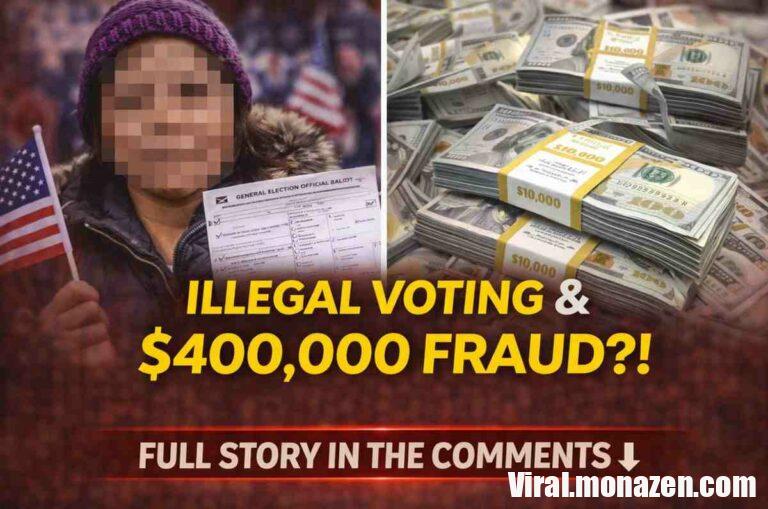
A recent fraud case uncovered in Pennsylvania has reignited a national conversation about election integrity, immigration enforcement, and the administration of public benefit programs in the United States. According to investigators, a man who had been living in the country unlawfully for years allegedly used a stolen identity to vote in multiple presidential elections while also receiving hundreds of thousands of dollars in government assistance.
The case has quickly drawn attention from lawmakers and policy advocates on both sides of the political spectrum, particularly as debates intensify in Washington over proposed election security legislation such as the SAVE Act. Supporters of stricter rules argue that the incident demonstrates vulnerabilities within the system, while critics caution against using isolated cases to justify sweeping policy changes.
As more details emerge, the story is becoming part of a broader political and policy discussion about immigration enforcement, identity fraud, and the safeguards surrounding voting and federal benefits.
The Allegations
According to court filings and statements from authorities, the individual at the center of the case allegedly lived in the United States for approximately two decades without legal status.
During that time, investigators say he used the identity of a U.S. citizen to obtain government-issued documents, access public benefits, and participate in federal elections.
Prosecutors allege that the man voted in five presidential elections while using the stolen identity. If confirmed, the case would represent a significant breach of both election laws and identity protections.
Authorities also say the individual received substantial public assistance over the years, including housing support, disability payments, and food assistance programs.
Among the benefits cited in the investigation:
- Approximately $259,000 in Section 8 housing assistance
- About $101,000 in Social Security disability payments
- Roughly $43,000 in SNAP food assistance
Combined, the benefits totaled nearly $400,000 over many years, according to investigators.
Officials say the benefits were obtained using the identity of a U.S. citizen whose information had allegedly been misused.
How Identity Fraud Happens
Cases involving identity fraud often exploit gaps in verification systems.
In many instances, individuals obtain Social Security numbers or other personal identifiers belonging to real citizens. Once those numbers are used to establish employment records or government accounts, it can be difficult for agencies to immediately detect discrepancies.
Public benefits programs are typically administered through a patchwork of federal, state, and local agencies. Each program may have its own verification process, which can sometimes create vulnerabilities when identities are shared across systems.
Experts say the complexity of these programs can make it challenging to detect fraud quickly, particularly when it involves long-term misuse of legitimate identification numbers.
Election systems can also be affected when voter registration records rely on identity information that appears valid but actually belongs to someone else.
The Election Security Debate
The allegation that an individual voted in multiple presidential elections has sparked renewed attention to election security measures.
While confirmed cases of voter fraud remain rare compared with the total number of ballots cast nationwide, even isolated incidents often become politically significant.
Supporters of stronger verification systems argue that the Pennsylvania case highlights the importance of stricter identification requirements for voter registration.
Some lawmakers have pointed to the incident while advocating for legislation designed to strengthen proof-of-citizenship requirements.
One such proposal, the Safeguard American Voter Eligibility (SAVE) Act, has been discussed in Congress as a measure intended to ensure that only U.S. citizens participate in federal elections.
Supporters say the legislation would improve identity verification and reduce the possibility of noncitizens voting.
Opponents argue that existing laws already prohibit noncitizens from voting and that new requirements could create barriers for legitimate voters.
Immigration and Benefits Enforcement
The case has also revived debates about immigration enforcement and eligibility rules for public assistance programs.
Federal law generally restricts many benefits to U.S. citizens or certain categories of lawful residents. However, identity fraud can allow individuals to bypass these restrictions by presenting themselves as eligible recipients.
Government agencies have implemented multiple systems to detect such misuse, including cross-checking databases and requiring documentation to verify eligibility.
Still, long-term fraud cases occasionally emerge, particularly when identity theft goes undetected for years.
Some policymakers say the Pennsylvania case underscores the need for stronger coordination among agencies that administer housing assistance, Social Security benefits, and food assistance programs.
Others emphasize that most recipients of these programs qualify legitimately and that fraud cases represent a small portion of total benefits distributed.
The Human Impact of Identity Theft
While much of the attention has focused on election and immigration policy, identity theft cases can also have serious consequences for the victims whose information is misused.
When someone’s identity is stolen, it can affect credit records, employment history, and eligibility for benefits.
Victims sometimes discover the problem years later when government records show activity they did not authorize.
Resolving identity theft cases can be time-consuming and complicated, requiring coordination among multiple government agencies.
For this reason, advocates for stronger identity protections say that preventing fraud benefits not only government systems but also the citizens whose information may be compromised.
A Political Flashpoint
As the case spreads across news outlets and social media platforms, it has become part of a broader political narrative surrounding immigration and election policy.
Some commentators see the incident as evidence that current safeguards are insufficient.
Others argue that policymakers should avoid generalizing from a single case when evaluating national systems that process millions of records each year.
Election experts frequently note that verified cases of noncitizen voting remain extremely uncommon relative to the total number of voters.
However, incidents involving fraud often attract significant attention because they raise questions about public trust in democratic institutions.
Investigations and Legal Consequences
The individual involved in the Pennsylvania case now faces multiple charges related to identity theft, fraud, and illegal voting.
If convicted, the penalties could include substantial fines and prison time.
Authorities are also examining whether additional charges may apply related to the misuse of federal benefit programs.
Law enforcement officials say the investigation may continue as agencies review records to determine the full scope of the alleged activities.
Broader Questions Moving Forward
Beyond the legal case itself, the situation raises broader questions about how governments balance accessibility with security.
Programs that provide housing assistance, disability payments, and food support are designed to help vulnerable populations.
At the same time, maintaining public confidence in these programs requires strong safeguards to prevent misuse.
Similarly, election systems must ensure both accessibility for eligible voters and protections against fraud.
Finding the right balance between those goals remains one of the most complex challenges facing policymakers.
A Reminder of Systemic Challenges
Cases like the one reported in Pennsylvania are rare but significant.
They highlight how identity theft, immigration enforcement, election administration, and public benefits systems intersect in complicated ways.
For lawmakers, the incident is likely to become part of ongoing debates over how to strengthen verification systems while maintaining access for those who qualify.
For the public, the case serves as a reminder that maintaining the integrity of large national systems requires constant oversight, coordination, and transparency.
As investigations proceed and policymakers continue to debate potential reforms, the Pennsylvania case will likely remain part of a larger national conversation about security, accountability, and trust in public institutions.