
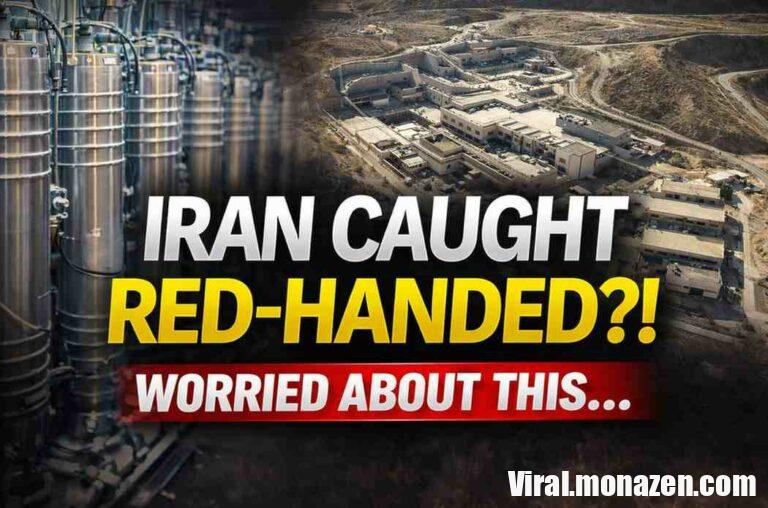
In recent days, social media posts and political commentary have reignited debate over Iran’s nuclear program, after claims circulated suggesting the country possesses a significant quantity of highly enriched uranium capable of being used for nuclear weapons.
The claims referenced remarks attributed to Steve Witkoff, who reportedly discussed intelligence assessments regarding Iran’s stockpile of uranium enriched to approximately 60 percent purity.
According to the posts spreading online, Iran may possess roughly 460 kilograms of uranium enriched to 60%, a level that experts say is technically below weapons-grade but significantly closer to it than typical civilian nuclear fuel.
The allegations have intensified discussion among policymakers, security analysts, and diplomats about the current state of Iran’s nuclear program and the potential implications for global stability.
Understanding Uranium Enrichment
To understand why the figure being circulated has attracted so much attention, it helps to understand how uranium enrichment works.
Natural uranium contains only a small percentage of the isotope uranium-235, which is the component capable of sustaining a nuclear chain reaction. Through a process involving high-speed centrifuges, uranium can be enriched to increase the proportion of uranium-235.
Different levels of enrichment are used for different purposes:
- 3–5% enrichment: typical for civilian nuclear power reactors
- 20% enrichment: considered highly enriched uranium
- 90% enrichment or higher: generally classified as weapons-grade
Iran’s reported enrichment to 60% purity therefore places the material technically below weapons-grade but much closer to it than the levels typically associated with civilian nuclear energy production.
Experts note that the technical leap from 60% enrichment to weapons-grade levels is far smaller than the leap from natural uranium to 60%.
The Background of Iran’s Nuclear Program
Iran’s nuclear ambitions have been a subject of international scrutiny for decades.
The program originally began in the 1950s with assistance from Western countries under the “Atoms for Peace” initiative. However, tensions surrounding the program intensified in the early 2000s when previously undisclosed enrichment facilities were revealed.
Since then, international negotiations have attempted to limit Iran’s nuclear activities in exchange for sanctions relief.
The most notable agreement was the Joint Comprehensive Plan of Action, commonly known as the Iran nuclear deal. The agreement imposed strict limits on Iran’s uranium enrichment levels, centrifuge numbers, and stockpile size.
Under the deal, Iran agreed to restrict enrichment to 3.67% and reduce its uranium stockpile significantly.
The Collapse of the Nuclear Deal
In 2018, then-U.S. President Donald J. Trump announced that the United States would withdraw from the agreement and reimpose economic sanctions on Iran.
The Trump administration argued that the deal did not sufficiently prevent Iran from eventually developing nuclear weapons and did not address other issues such as missile development and regional activities.
Following the withdrawal, Iran gradually began rolling back its commitments under the agreement, increasing enrichment levels and expanding its stockpile of uranium.
By 2021, international inspectors reported that Iran had begun enriching uranium up to 60 percent purity, far above the limits set by the original deal.
International Oversight and Inspections
The International Atomic Energy Agency is responsible for monitoring Iran’s nuclear activities.
IAEA inspectors regularly visit declared nuclear facilities and verify uranium stockpiles, centrifuge installations, and enrichment levels.
In its reports, the agency has confirmed that Iran possesses uranium enriched beyond the limits originally established by the nuclear agreement.
However, the IAEA has not publicly confirmed claims circulating on social media regarding the exact quantity of material capable of producing a specific number of nuclear weapons.
Experts caution that calculating how many weapons could theoretically be produced from a given stockpile is complicated and depends on multiple technical factors.
Why the Number “11 Nuclear Weapons” Appears in Debate
Some analysts and commentators have suggested that a stockpile of hundreds of kilograms of 60% enriched uranium could potentially be further enriched to weapons-grade levels.
In theory, if uranium enriched to 60% were processed further to reach 90% enrichment, the amount of material required to build a nuclear device would be reduced.
However, nuclear weapons development involves far more than enriched uranium alone.
Experts point out that several additional steps are necessary:
- Further enrichment to weapons-grade levels
- Metallization and weapon design
- Development of delivery systems
- Testing and integration
Because of these complexities, estimates about the number of weapons a country could produce are often highly speculative.
Regional and Global Security Concerns
The possibility that Iran could expand its nuclear capabilities has long been a source of tension in the Middle East.
Countries such as Israel have repeatedly warned that Iran obtaining nuclear weapons would pose a serious security threat to the region.
Israel has stated publicly that it would consider taking action to prevent Iran from developing nuclear weapons capability.
Meanwhile, the United States and European nations have sought diplomatic solutions through negotiations and sanctions aimed at limiting Iran’s nuclear activities.
Military and Strategic Calculations
In addition to diplomacy, military planning has also played a role in discussions about Iran’s nuclear program.
Military analysts often evaluate scenarios in which nuclear facilities could be targeted in order to slow or disrupt enrichment activities.
However, many of Iran’s nuclear sites—such as the underground Fordow Fuel Enrichment Plant—are heavily fortified and located deep underground, making them difficult to destroy.
Experts warn that military strikes could carry significant risks, including escalation into broader regional conflict.
The Role of Media and Social Media
The recent viral posts illustrate how quickly nuclear-related claims can spread online.
Short messages and dramatic headlines often simplify complex technical information, sometimes presenting worst-case scenarios as established facts.
Nuclear experts frequently emphasize the importance of verifying information through official reports and scientific analysis rather than relying solely on viral social media claims.
In the digital era, discussions about nuclear policy, diplomacy, and security can quickly become entangled with political messaging and public opinion.
Diplomatic Efforts Continue
Despite ongoing tensions, diplomatic efforts to manage Iran’s nuclear program continue.
Negotiations involving European countries, Russia, China, and the United States have attempted to revive elements of the original nuclear agreement or establish new frameworks for limiting enrichment.
These negotiations have faced repeated setbacks but remain one of the primary tools used by the international community to address nuclear proliferation concerns.
A Complex and Uncertain Situation
The debate over Iran’s uranium stockpile reflects a broader challenge in global security: balancing transparency, diplomacy, and deterrence.
While enrichment levels and stockpile sizes can be measured scientifically, interpreting what those numbers mean for potential weapons development requires careful analysis.
As discussions continue among governments and international organizations, the situation surrounding Iran’s nuclear program remains one of the most closely monitored issues in global geopolitics.
For policymakers, analysts, and citizens alike, understanding the facts behind the headlines will remain essential as the international community navigates the risks and uncertainties of nuclear proliferation in the years ahead.