A growing political debate in Washington is once again placing election laws at the center of national attention. At the heart of the controversy is the Safeguard American Voter Eligibility (SAVE) Act, a proposed federal measure that would require proof of U.S. citizenship to register to vote in federal elections.
The legislation has ignited intense arguments between Republicans and Democrats, with supporters describing it as a necessary step to protect election integrity and critics warning that it could make it harder for millions of Americans to vote.
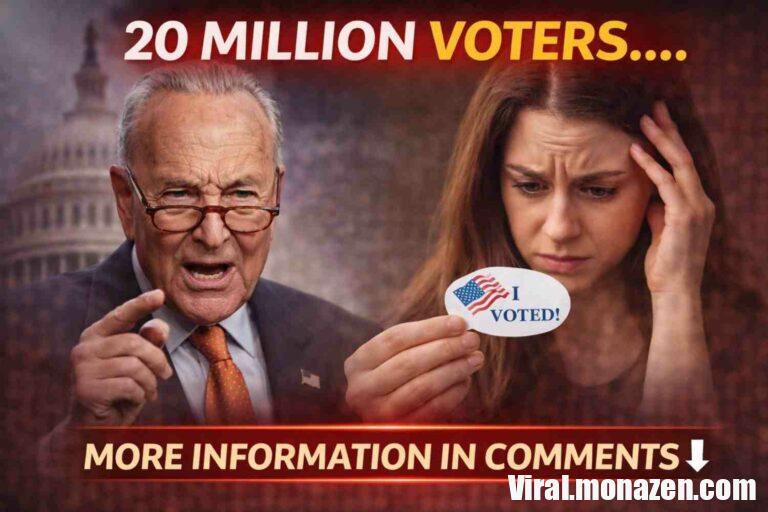
Among the most vocal critics is Senate Majority Leader Chuck Schumer, who has argued that the measure could result in millions of eligible voters being removed from voter rolls or prevented from registering.
Supporters of the bill, however, insist that such claims are exaggerated and that the legislation is aimed strictly at ensuring that only U.S. citizens participate in federal elections.
The dispute reflects broader tensions in American politics about election security, voter access, and the future of democratic participation.
What the SAVE Act Proposes
The SAVE Act would amend federal election law to require individuals registering to vote in federal elections to provide documentary proof of U.S. citizenship.
Examples of acceptable documentation could include:
- A U.S. passport
- A birth certificate
- Naturalization papers
- Other government documents confirming citizenship
Supporters of the bill argue that these requirements would bring voter registration standards in line with other federal processes that already require proof of citizenship.
The legislation is backed by many Republican lawmakers who say it is a common-sense step to strengthen public confidence in election outcomes.
Several proponents have pointed out that federal law already prohibits non-citizens from voting, but the SAVE Act would introduce additional verification measures to ensure compliance.
Why Critics Are Concerned
Opponents of the bill, including many Democratic lawmakers and voting rights organizations, argue that requiring documentary proof of citizenship could create barriers for legitimate voters.
Schumer and others have warned that millions of Americans do not readily have access to documents such as birth certificates or passports.
According to research cited by voting rights groups, tens of millions of eligible voters may lack immediate access to such documentation, particularly among certain populations.
Groups that may face challenges include:
- Elderly Americans born before standardized birth records were widely issued
- Married individuals whose names have changed
- Low-income citizens who may not possess passports
- Rural residents with limited access to government offices
Critics say these barriers could disproportionately affect minority communities and younger voters.
“The right to vote is fundamental,” Schumer said in remarks about the legislation. “Any measure that risks making it harder for eligible Americans to participate deserves careful scrutiny.”
Supporters Emphasize Election Integrity
Supporters of the SAVE Act reject the argument that the legislation would suppress voter participation.
They argue that requiring proof of citizenship is a reasonable safeguard given the importance of elections in determining national leadership.
Republican lawmakers backing the bill have also emphasized that similar documentation requirements already exist for many everyday activities, including employment verification and international travel.
They say the same principle should apply when registering to vote in federal elections.
Supporters also argue that the bill responds to growing public concern about election integrity following several contentious election cycles.
For many advocates, the goal is to strengthen confidence in democratic institutions.
“If people believe elections are secure, it benefits everyone regardless of party,” one congressional supporter said during debate over the measure.
The Question of Non-Citizen Voting
A central issue in the debate surrounding the SAVE Act is the question of non-citizen participation in elections.
Federal law already makes it illegal for non-citizens to vote in federal elections. Violations can lead to criminal penalties, including fines and imprisonment.
Multiple studies have found that cases of non-citizen voting are rare, though political disagreement continues over the extent of the issue.
Some researchers and election officials say there is little evidence of widespread non-citizen voting affecting election outcomes.
Others argue that even isolated cases justify stronger safeguards to ensure that only eligible voters participate.
This disagreement has fueled political battles over election law reforms in recent years.
Legal and Administrative Challenges
If enacted, the SAVE Act would require election officials across the country to adjust their voter registration systems.
State election agencies would need to develop procedures for verifying citizenship documents and handling cases where documentation cannot be immediately produced.
Election experts say such changes could introduce logistical challenges.
Local election offices already face significant responsibilities during election cycles, including managing voter rolls, coordinating polling locations, and administering early voting systems.
Adding new verification procedures could increase administrative complexity and costs.
Supporters argue that the long-term benefits of stronger voter verification would outweigh these challenges.
Historical Context: Voting Rights and Election Laws
The debate over the SAVE Act echoes earlier conflicts over voting regulations in the United States.
Throughout American history, election laws have often been shaped by competing concerns about accessibility and security.
Major milestones include:
- The Voting Rights Act of 1965, which expanded protections against discriminatory voting practices
- The National Voter Registration Act of 1993, often called the “Motor Voter” law, which simplified voter registration
- Various state-level voter ID laws enacted in the past two decades
Each reform has sparked debate over whether the measures strengthen democracy or create unnecessary barriers.
The SAVE Act represents the latest chapter in that ongoing discussion.
Public Opinion Divided
Polls suggest that American voters remain divided over election policy issues.
Many voters support measures intended to prevent election fraud, including voter identification requirements.
At the same time, surveys often show strong public support for policies that make voting easier and more accessible.
This combination of priorities—security and accessibility—creates a complex political landscape for lawmakers.
Both sides of the SAVE Act debate claim they are defending democratic principles.
The Legislative Path Ahead
The future of the SAVE Act remains uncertain.
While the bill has gained support among many Republican lawmakers, its prospects depend on negotiations within Congress and the broader political climate.
Legislation affecting election rules often faces intense scrutiny and partisan disagreement.
Even if the measure passes one chamber of Congress, it could encounter significant challenges in the other.
Additionally, any sweeping election reform could face legal challenges once implemented.
A Debate Likely to Continue
As the next national election cycle approaches, debates about voting rights and election security are expected to intensify.
The SAVE Act has become one of the most prominent proposals in that discussion.
Supporters see it as a necessary step to safeguard elections.
Critics warn it could create obstacles for millions of eligible voters.
For voters and lawmakers alike, the challenge lies in balancing two fundamental democratic goals: protecting election integrity while ensuring that every eligible citizen can easily participate in the electoral process.
As Congress continues to debate the proposal, the outcome may shape the future of American voting laws—and the broader conversation about how democracy should function in the United States.