
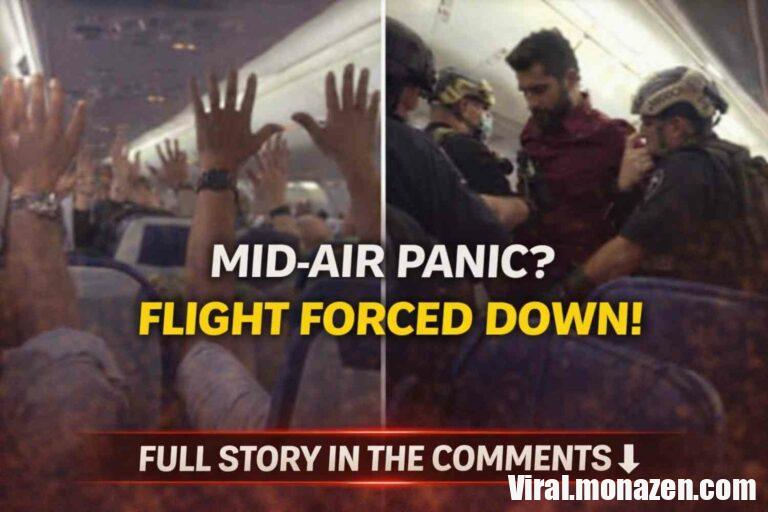
Passengers aboard a Southwest Airlines flight expecting a routine trip from Nashville to Fort Lauderdale instead experienced hours of anxiety and confusion after a passenger reportedly made threatening remarks that prompted the aircraft to divert to Atlanta.
The incident, which unfolded mid-flight and quickly spread across social media, has reignited conversations about airline security, passenger behavior, and how viral narratives can shape public perception during moments of crisis.
While law enforcement later confirmed that no explosives were found on board, the disruption left many passengers shaken and highlighted the delicate balance airlines must maintain between safety protocols and managing unexpected disturbances in the air.
The Incident in the Air
According to preliminary reports circulating online and among aviation observers, Southwest Flight 2094 departed Nashville International Airport on a routine evening route to Fort Lauderdale.
Shortly after takeoff, the situation inside the cabin reportedly escalated when a passenger allegedly began shouting threatening statements that referenced explosives.
Other passengers, alarmed by the outburst, alerted flight attendants. Airline crews are trained to treat any potential threat seriously, particularly when it involves language referencing bombs or violence.
Flight attendants quickly notified the pilots, who initiated emergency procedures consistent with aviation safety protocols.
Within minutes, the aircraft’s course was adjusted and the crew requested permission to divert to the nearest suitable airport.
Atlanta’s Hartsfield-Jackson International Airport—one of the busiest and best equipped airports in the country—was selected as the diversion destination.
Emergency Response Upon Landing
When the plane landed in Atlanta, local law enforcement and airport security personnel were already waiting on the tarmac.
Authorities boarded the aircraft and removed the individual believed to have made the threatening remarks.
Witness videos circulating online appear to show officers escorting a man through the cabin while passengers remained seated.
Some clips posted to social media show passengers with their hands raised, though the exact sequence of events inside the aircraft has not been fully verified by official sources.
Authorities quickly conducted a safety sweep of the aircraft to ensure that no explosives or suspicious devices were present.
Officials later confirmed that no bomb or weapon was found.
Passengers Describe a Tense Atmosphere
For those onboard, the experience was unsettling.
Several passengers described a sudden shift from an ordinary flight to a tense situation where uncertainty filled the cabin.
Aviation incidents involving potential threats often unfold rapidly, and passengers may not immediately know what is happening behind the scenes.
One traveler reportedly told local media that the mood in the cabin changed instantly when people realized the situation might involve a security threat.
“When you hear the word ‘bomb’ on a plane, everyone’s heart stops,” the passenger said. “You don’t know if it’s real or not, but you know it’s serious.”
Despite the fear, many passengers also praised the professionalism of the flight crew.
Flight attendants and pilots followed established safety procedures designed specifically for such emergencies.
Airline Safety Protocols
Commercial aviation operates under some of the strictest safety protocols of any transportation industry.
Federal aviation rules require airline crews to treat all bomb threats as credible until proven otherwise.
When a potential threat arises, pilots coordinate with air traffic controllers and airline operations teams to determine the safest course of action.
Diverting a flight may cause delays and inconvenience, but it remains the safest option when there is even a small possibility of danger.
Security experts emphasize that such procedures exist precisely because threats—real or hoaxes—cannot be ignored at 35,000 feet.
Law Enforcement Investigation
After the suspect was removed from the aircraft, law enforcement officials began an investigation into the incident.
Authorities typically examine several factors in cases like this, including whether the individual intentionally made threats, whether the remarks were misunderstood, or whether mental health or other issues may have played a role.
Making a false bomb threat on an aircraft is a serious offense under federal law.
Convictions can carry significant penalties, including prison sentences and heavy fines.
However, investigators must carefully review witness accounts, video evidence, and statements from those involved before determining whether charges will be filed.
Social Media Reaction
Within hours, the story began circulating widely across social media platforms.
Some posts framed the incident as a dramatic example of security risks in air travel, while others urged caution until more facts became available.
Viral posts often included political commentary about immigration, security policies, or media coverage.
However, aviation experts warn that early online narratives can sometimes spread incomplete or misleading information.
“Incidents like this can quickly become politicized before investigators even finish their initial review,” said one aviation safety analyst.
“In many cases, the reality turns out to be more complex than the first viral posts suggest.”
The Challenge of Information in the Digital Age
The rapid spread of smartphone footage and social media commentary has changed how aviation incidents become public.
In earlier decades, details about in-flight disruptions might have remained largely unknown outside official reports.
Today, however, passengers can record and upload videos instantly, creating a global audience within minutes.
While this can increase transparency, it can also lead to speculation before authorities confirm what actually occurred.
As a result, aviation officials often urge the public to wait for verified information before drawing conclusions.
Airline Industry Perspective
For airlines, incidents involving threats—even when unfounded—can have significant operational consequences.
Flights may be delayed, passengers must be rebooked, and aircraft may require additional security inspections before returning to service.
The emotional impact on passengers and crew members can also be considerable.
Airlines invest heavily in training staff to manage disruptive or potentially dangerous situations calmly and professionally.
Industry groups note that such training has become increasingly important as passenger disruptions on flights have risen in recent years.
Security in Modern Air Travel
The incident also highlights the layered security system that protects commercial aviation.
Before passengers board aircraft, they pass through airport security screening conducted by the Transportation Security Administration.
Once in the air, flight crews and passengers themselves become part of the safety network.
Crew members receive training on de-escalation and emergency procedures, while passengers are encouraged to report suspicious behavior immediately.
This combination of vigilance and rapid response has proven effective in preventing serious incidents.
Moving Forward
As investigators continue reviewing the Southwest flight incident, authorities will determine whether criminal charges are appropriate.
For passengers who experienced the diversion firsthand, the event serves as a reminder that aviation safety systems—though sometimes disruptive—are designed to protect everyone onboard.
While the scare ultimately turned out not to involve explosives, the swift response by airline staff and law enforcement reflects the seriousness with which aviation threats are treated.
In a world where millions of people fly every day, maintaining public trust in airline safety remains essential.
Events like the diversion of Southwest Flight 2094 show that even in moments of uncertainty, the aviation system is built to respond quickly, prioritize safety, and protect passengers in the skies.