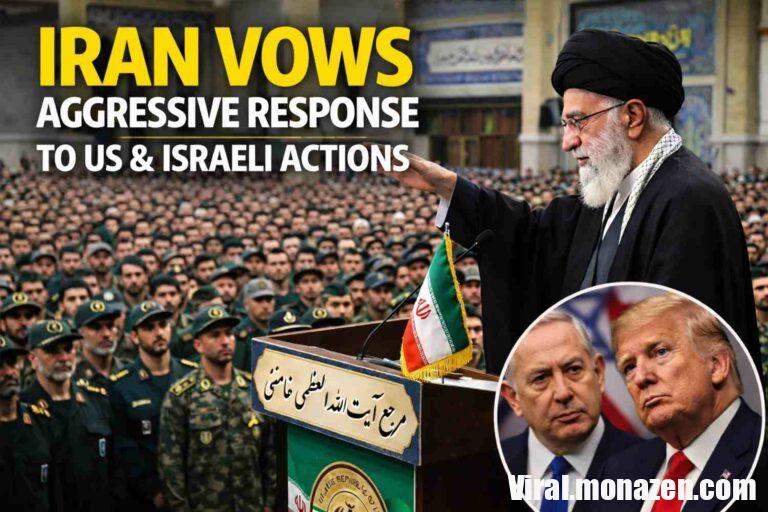
In recent days, commentary across Middle Eastern media outlets has intensified regarding Iran’s response to growing geopolitical tensions in the region. Several commentators and analysts have expressed surprise at the scale and nature of Iran’s recent actions, suggesting that the developments may have exceeded earlier expectations.
One widely circulated commentary described the reactions coming from Tehran as unexpectedly forceful, arguing that the evolving situation may reveal internal dynamics within Iran’s leadership that had not previously been fully visible to outside observers.
Although interpretations vary widely depending on political perspective, the debate highlights how rapidly changing events in the Middle East continue to generate intense scrutiny from regional and international media alike.
Media Narratives in Times of Crisis
When geopolitical tensions escalate, media narratives often play a powerful role in shaping public understanding of events.
Across the Arab world, television networks, digital outlets, and political commentators regularly analyze developments involving Iran, Israel, and the United States. Each outlet often interprets events through its own political, cultural, or strategic lens.
In this case, several commentators argued that Iran’s responses in recent developments appeared stronger and more coordinated than some analysts had predicted.
Such assessments do not necessarily reflect official government positions but rather illustrate how media debates evolve during periods of uncertainty.
These narratives frequently influence public perception of regional power dynamics.
The Central Role of Iran’s Leadership
Iran’s political system is structured around several key institutions, with the Supreme Leader occupying the highest position of authority.
The Supreme Leader holds significant influence over military, security, and strategic policy decisions. As a result, international observers often pay close attention to signals coming from Iran’s top leadership when assessing the country’s strategic direction.
Within this system, decisions are typically shaped through consultation among multiple institutions, including:
- The Office of the Supreme Leader
- The Islamic Revolutionary Guard Corps (IRGC)
- The Iranian presidency
- National security councils and advisory bodies
Because of this layered structure, interpreting Iran’s actions can be complex.
Observers often attempt to identify which institutions or individuals may be guiding specific policy decisions.
Regional Perceptions of Iran’s Strategy
Across the Middle East, opinions about Iran’s strategic behavior vary significantly.
Some governments view Tehran as an assertive regional actor whose policies influence conflicts in several neighboring countries.
Others argue that Iran’s actions reflect defensive measures in response to external pressure and long-standing geopolitical rivalry.
Media commentary frequently reflects these differing perspectives.
In the recent wave of discussion, some commentators suggested that Iran’s actions appear more decisive than anticipated, while others caution against drawing conclusions too quickly without clearer evidence of long-term strategy.
Such debates illustrate the broader uncertainty surrounding the region’s evolving security landscape.
The Complexity of Military Decision-Making
Military responses in highly sensitive geopolitical environments are rarely spontaneous. They usually involve careful planning, coordination, and risk assessment.
Countries facing external threats often rely on complex strategic calculations that weigh both military effectiveness and political consequences.
In Iran’s case, defense policy has historically emphasized deterrence—the ability to discourage adversaries by demonstrating that any attack would carry significant consequences.
This approach has shaped the development of Iran’s missile program, regional alliances, and military capabilities.
Because deterrence strategies depend heavily on signaling strength, analysts sometimes interpret visible responses as part of broader messaging rather than purely tactical decisions.
The Role of the Islamic Revolutionary Guard Corps
The Islamic Revolutionary Guard Corps, commonly known as the IRGC, plays a central role in Iran’s security architecture.
Established after the 1979 Iranian Revolution, the IRGC operates alongside the regular Iranian armed forces but focuses particularly on protecting the country’s political system and strategic interests.
Over time, the organization has expanded its influence across multiple sectors, including:
- Military operations
- Intelligence activities
- Strategic missile development
- Economic projects
Because of this wide scope, analysts often view the IRGC as one of the key actors shaping Iran’s response to regional developments.
Its actions are closely watched by both allies and adversaries.
Media Interpretation Versus Official Policy
One of the challenges in interpreting regional events is distinguishing between media commentary and official policy positions.
While commentators may express strong opinions about political leaders or strategic decisions, such statements do not necessarily reflect the official stance of governments involved.
In times of heightened tension, media outlets often adopt dramatic language or vivid interpretations that capture audience attention.
This can sometimes create narratives suggesting decisive shifts in policy even when governments themselves remain cautious.
Experts emphasize the importance of evaluating developments through verified information rather than relying solely on commentary.
Global Attention on the Middle East
The Middle East remains one of the most closely monitored regions in global politics.
Its strategic importance stems from several factors:
- Major energy reserves and production capacity
- Key maritime shipping routes
- Long-standing geopolitical rivalries
- The presence of multiple global and regional powers
Because of these factors, developments involving Iran frequently attract attention from governments, investors, and security analysts around the world.
Statements or actions perceived as unexpected can quickly become headline news.
Strategic Communication and Public Perception
Political leaders and governments often use strategic communication to shape how their actions are perceived internationally.
In some cases, strong public messaging is intended to reinforce deterrence by demonstrating confidence and resolve.
In other situations, statements may be aimed primarily at domestic audiences, reinforcing national unity during periods of tension.
For analysts studying international relations, understanding the difference between signaling and actual operational strategy is essential.
What appears dramatic in media coverage may sometimes represent calculated communication rather than a sudden change in policy.
The Unpredictability of Regional Dynamics
One consistent characteristic of Middle Eastern geopolitics is its unpredictability.
Conflicts, alliances, and diplomatic relations often evolve rapidly as political circumstances change.
Regional actors frequently reassess their strategies in response to developments involving neighboring countries or global powers.
This fluid environment means that analysts must continually update their assessments based on new information.
Media commentary reflecting surprise or uncertainty is therefore not unusual.
It reflects the reality that complex geopolitical situations rarely follow simple or predictable paths.
Diplomacy as a Long-Term Stabilizing Force
Despite the intense rhetoric that sometimes accompanies regional tensions, diplomatic engagement remains an essential tool for preventing escalation.
Over the years, negotiations involving Iran and international partners have attempted to address issues ranging from nuclear development to sanctions and regional security.
While progress has often been slow and occasionally stalled, many experts believe diplomacy remains the most effective pathway toward long-term stability.
Sustained dialogue can reduce misunderstandings, clarify intentions, and create opportunities for de-escalation.
Looking Ahead
The ongoing discussion across regional media outlets about Iran’s recent actions highlights how closely the world watches developments in the Middle East.
Whether the current moment represents a temporary phase of heightened tension or the beginning of a broader strategic shift remains uncertain.
What is clear, however, is that events involving Iran continue to influence political calculations across the region.
For policymakers, analysts, and observers alike, understanding the interplay between media narratives, political messaging, and strategic decision-making will remain essential in interpreting the next chapter of this evolving geopolitical story.
As the situation continues to unfold, global attention will remain firmly focused on how regional actors navigate the delicate balance between deterrence, diplomacy, and stability.