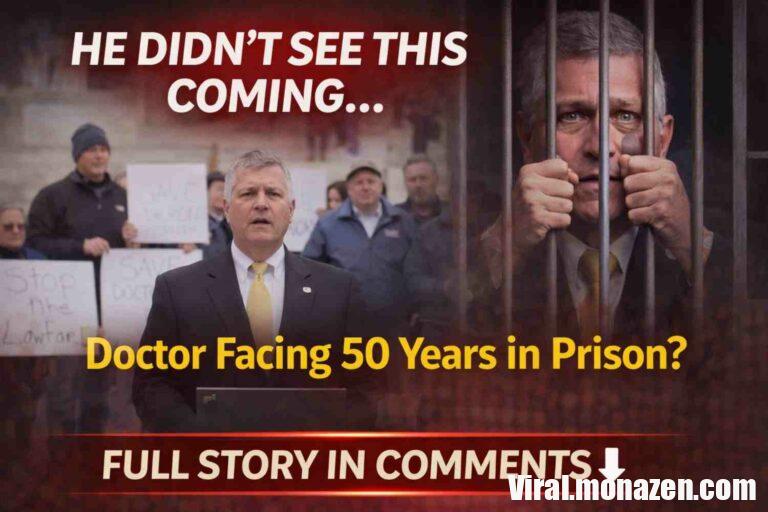
A Maryland physician who became known during the COVID-19 pandemic for offering monoclonal antibody treatments to patients says he is now facing serious legal jeopardy — and his case is igniting fierce debate about medical freedom, pandemic policies, and the role of government oversight in healthcare.
Dr. Ron Elfenbein, an emergency medicine physician and founder of a network of urgent care clinics in Maryland, has become the center of controversy after publicly stating that legal actions against him could lead to severe criminal penalties. Supporters claim the doctor is being punished for providing life-saving treatments during a public health emergency, while critics argue that medical standards and regulatory compliance must still apply even in times of crisis.
The dispute has rapidly become a flashpoint in broader conversations about how doctors were allowed to treat COVID-19 during the pandemic — and what accountability should look like years later.
The Rise of Monoclonal Antibody Treatments
Monoclonal antibody therapies emerged early in the pandemic as one of the most promising treatments for COVID-19, particularly for patients at high risk of severe illness.
These laboratory-made antibodies are designed to mimic the immune system’s ability to fight off harmful pathogens such as viruses. In the case of COVID-19, monoclonal antibodies were developed to attach to the SARS-CoV-2 virus and block its ability to infect cells.
Several monoclonal antibody therapies received Emergency Use Authorization (EUA) from the U.S. Food and Drug Administration during the pandemic. Hospitals and treatment centers across the United States administered these treatments to vulnerable patients in hopes of preventing hospitalization and death.
At one point, monoclonal antibody infusion clinics were set up nationwide to help ease the burden on overwhelmed hospitals.
Dr. Elfenbein was among the physicians who offered these treatments to patients during the height of the crisis.
A Physician on the Front Lines
During the early waves of COVID-19, many frontline doctors faced enormous pressure as they tried to care for patients while navigating evolving medical guidelines.
Dr. Elfenbein gained attention for setting up treatment programs that provided monoclonal antibody infusions outside of traditional hospital settings.
Supporters say his clinics allowed patients to receive care quickly during a time when hospital systems were struggling to manage surging case numbers.
They argue that physicians like Elfenbein stepped up during a moment when the healthcare system was under extraordinary strain.
“Doctors were trying to save lives in real time while the science was still developing,” said one supporter familiar with the case. “Many of them were forced to make difficult decisions with incomplete information.”
The Legal Controversy
The legal challenges facing Dr. Elfenbein have sparked confusion and concern among his supporters, who say the allegations are being misunderstood by the public.
According to statements made by the physician, he believes the legal actions against him stem from his use of monoclonal antibody treatments during the pandemic.
However, legal experts note that cases involving physicians rarely hinge solely on which treatments were used.
Instead, investigations into medical practices often focus on questions such as:
• whether regulatory guidelines were followed
• how treatments were billed or administered
• whether patient consent and documentation requirements were met
• and whether medical protocols complied with federal or state rules
Because healthcare regulations are complex, disputes between physicians and regulators are not uncommon.
Still, the severity of the penalties mentioned in public discussions has captured national attention.
Public Reaction and Political Attention
News of the case has spread widely online, particularly in communities critical of pandemic-era health policies.
Many supporters argue that doctors who treated COVID-19 patients should not face punishment for attempting to save lives.
Some have framed the situation as a broader conflict between frontline physicians and government agencies that imposed strict oversight during the pandemic.
Calls have even emerged from some supporters urging political leaders to intervene or review the case.
Others, however, caution against drawing conclusions before all legal facts are made public.
Healthcare law specialists note that medical investigations can involve multiple factors unrelated to the treatments themselves.
A Broader Pandemic Reckoning
The controversy surrounding Dr. Elfenbein reflects a larger national reassessment of pandemic policies.
Across the United States, debates continue about how governments, hospitals, and regulators responded to COVID-19.
Some Americans believe that strict oversight was necessary to protect public safety during an unprecedented health crisis.
Others argue that bureaucratic barriers sometimes prevented physicians from using potentially beneficial treatments quickly.
These tensions have fueled ongoing discussions about the balance between medical innovation and regulatory control.
The Role of Government Oversight
Medical regulation exists for an important reason: protecting patients from unsafe or ineffective treatments.
Organizations such as the FDA and state medical boards establish guidelines to ensure that therapies meet safety standards before widespread use.
However, critics of regulatory systems say that emergency situations sometimes require faster decision-making than traditional approval processes allow.
During COVID-19, governments attempted to bridge that gap through emergency authorizations that allowed certain treatments to be used before full approval.
Still, disagreements over how those authorizations should be implemented often emerged.
The Human Cost of the Pandemic
For many healthcare workers, the pandemic was one of the most difficult periods of their careers.
Doctors, nurses, and emergency responders faced unprecedented patient loads, shortages of medical supplies, and constant changes in treatment guidance.
Some physicians say they were forced to adapt quickly as new scientific evidence emerged.
In that environment, conflicts between regulators and healthcare providers sometimes became inevitable.
Cases like Dr. Elfenbein’s illustrate how those tensions have continued long after the most severe waves of the pandemic passed.
What Comes Next
As legal proceedings move forward, the case may shed light on how medical decisions made during the pandemic will be judged in the years ahead.
For supporters of the physician, the issue is about defending doctors who acted under extreme circumstances.
For regulators, the priority remains ensuring that medical practices follow established standards designed to protect patients.
Regardless of the outcome, the controversy underscores how deeply the pandemic reshaped public attitudes toward healthcare policy.
Even years later, questions about how doctors treated COVID-19 patients — and whether those decisions should be second-guessed — remain politically and emotionally charged.
A Debate That Isn’t Over
The case involving Dr. Ron Elfenbein is likely to remain a focal point in the ongoing conversation about pandemic medicine.
As Americans continue to process the lessons of COVID-19, the intersection of science, law, and public trust will remain under intense scrutiny.
For many observers, the larger question is not just about one physician’s legal fight.
It is about how society should evaluate the actions of healthcare professionals who worked on the front lines of one of the most disruptive public health crises in modern history.