
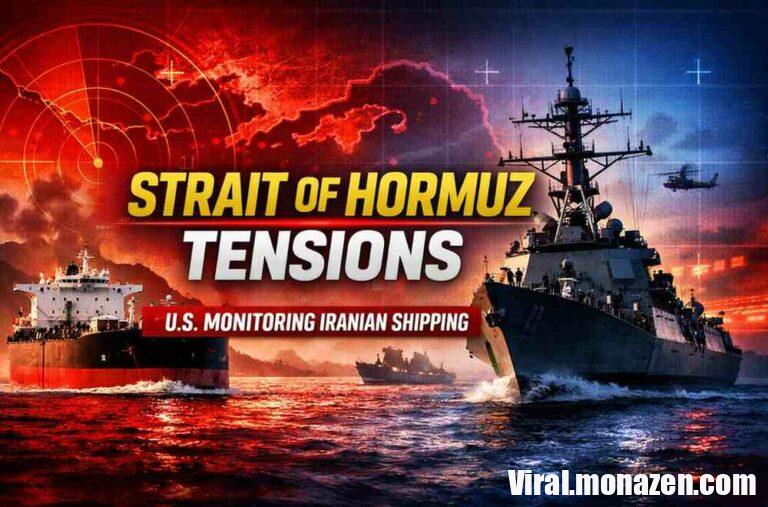
In the narrow waters of the Strait of Hormuz, a strategic maritime corridor that carries a large share of the world’s oil shipments, even small signals of confrontation can quickly capture global attention. Recent discussions in international media and policy circles have focused on reports suggesting that the United States is pushing for stricter monitoring of vessels connected to Iran as they transit the region.
While the situation remains fluid and shaped by complex diplomacy, the issue highlights the growing concerns surrounding maritime security, energy supply stability, and geopolitical rivalry in one of the world’s most critical shipping lanes.
The Strategic Importance of the Strait of Hormuz
Few places on Earth hold as much economic significance as the Strait of Hormuz. Located between Iran and Oman, the narrow passage connects the Persian Gulf to the Gulf of Oman and the Arabian Sea.
Every day, millions of barrels of crude oil and petroleum products travel through these waters toward global markets in Asia, Europe, and beyond. According to energy analysts, roughly one-fifth of the world’s oil trade passes through this corridor.
Because of this concentration of energy shipments, the strait has long been considered a geopolitical pressure point. Any disruption—even temporary—can influence oil prices, shipping insurance costs, and broader economic stability.
For decades, regional tensions have occasionally raised fears that the passage could become a flashpoint between rival powers.
The U.S. Position: Monitoring Maritime Activity
Recent reports circulating in media outlets suggest that officials in Washington are seeking greater oversight of shipping activities linked to Iran in the region. According to these discussions, the goal would be to ensure transparency and maintain safe navigation in international waters.
American officials have repeatedly emphasized the importance of freedom of navigation—a principle that allows commercial vessels to travel through international waterways without obstruction.
Monitoring maritime traffic is not new. Navies and coast guards around the world routinely track shipping routes to prevent piracy, smuggling, and other security risks. In the Gulf region, multinational patrols and surveillance systems have existed for years.
However, when political tensions rise, these monitoring efforts can take on greater geopolitical significance.
Iran’s Perspective and Regional Sensitivities
Iran has historically rejected external pressure regarding its activities in the Persian Gulf. Iranian officials frequently argue that regional security should be managed primarily by the countries located along the Gulf itself rather than by outside powers.
Tehran also views increased monitoring requests as part of broader political pressure linked to sanctions and long-standing diplomatic disputes with Western governments.
Iranian leaders have repeatedly emphasized their own role in safeguarding shipping routes in the region. At the same time, they have warned that foreign military presence near their territorial waters can contribute to instability rather than reduce it.
These differing viewpoints illustrate the delicate balance of interests that shapes the security environment around the Strait of Hormuz.
Why Energy Markets Are Watching Closely
Whenever tensions rise in the Gulf, global energy markets react quickly.
Oil prices are sensitive to the perception of risk. Even rumors of potential disruptions can cause traders to adjust their forecasts, driving price volatility.
Shipping companies also monitor developments carefully. If the security situation appears uncertain, insurers may raise premiums for vessels operating in the region. Those additional costs eventually affect the global supply chain, from fuel prices to transportation expenses.
Energy analysts often describe the Strait of Hormuz as a “chokepoint”—a narrow location where a large portion of global trade must pass through a limited space.
Because alternatives are limited, maintaining stability in this corridor is considered a shared interest among energy-producing nations, importing countries, and international shipping firms.
The Broader Geopolitical Context
The debate surrounding maritime monitoring is occurring against a backdrop of wider geopolitical tensions.
Relations between Iran and the United States have been strained for decades, shaped by disagreements over nuclear policy, regional alliances, economic sanctions, and security issues.
Periodic incidents at sea—such as the seizure of tankers or accusations of harassment between naval vessels—have occasionally escalated diplomatic friction.
International observers note that maritime disputes in the Gulf often reflect deeper political disagreements rather than isolated security concerns.
As a result, each development in the Strait of Hormuz tends to be interpreted through the lens of broader regional rivalries.
International Shipping and the Role of Alliances
To address security concerns in strategic waterways, several countries participate in multinational maritime initiatives.
These operations typically involve patrol vessels, surveillance aircraft, and intelligence-sharing arrangements aimed at protecting commercial shipping routes.
Supporters of these efforts argue that cooperative security helps deter illegal activities such as piracy or sabotage.
Critics, however, sometimes view such coalitions as extensions of geopolitical influence rather than purely defensive arrangements.
The challenge for policymakers is balancing these competing interpretations while maintaining safe conditions for international commerce.
Diplomatic Channels Remain Active
Despite tensions, diplomacy continues to play a role in managing maritime disputes in the region.
Regional governments, global powers, and international organizations frequently engage in dialogue aimed at reducing misunderstandings that could lead to escalation.
Energy-exporting countries in the Gulf have a strong incentive to keep shipping lanes open and secure, since their economies depend heavily on uninterrupted exports.
Similarly, major oil-importing countries—from Asia to Europe—favor stability in the region to protect their energy supply chains.
Because of these shared interests, many analysts believe that diplomatic engagement remains the most effective way to prevent crises from developing in the Strait of Hormuz.
The Human Dimension Behind Strategic Headlines
While geopolitical discussions often focus on military deployments and diplomatic statements, there is also a human dimension to the story.
Thousands of commercial sailors, port workers, and logistics crews operate in the Gulf every day. Their livelihoods depend on the safe movement of ships through busy sea lanes.
For these workers, stability in maritime routes is not merely a strategic issue—it is a matter of daily safety and economic security.
When tensions rise, shipping companies may adjust routes or implement additional safety procedures, affecting crews and port operations across the region.
What Happens Next?
Predicting the future trajectory of tensions in the Strait of Hormuz is difficult. The region has experienced cycles of confrontation and de-escalation over the past several decades.
What remains consistent is the strategic importance of the waterway.
As global demand for energy continues and shipping routes remain concentrated in narrow passages, the Gulf will likely remain a focal point of international attention.
The key question for policymakers is how to balance security concerns, diplomatic engagement, and economic stability in a region where many interests intersect.
A Corridor the World Cannot Ignore
The Strait of Hormuz may appear as a thin line on a map, but its significance extends far beyond geography.
Energy markets, maritime commerce, and regional security all converge within its narrow waters. Any change in the political or military landscape surrounding the strait therefore carries implications that ripple across the global economy.
For now, discussions about monitoring shipping activities reflect a broader effort by governments to manage risk in one of the world’s most strategically sensitive regions.
Whether those efforts lead to cooperation or deeper rivalry will depend largely on diplomacy, communication, and the willingness of regional and international actors to avoid escalation.
In the meantime, the world will continue to watch the Strait of Hormuz closely—because what happens there rarely stays there.