ADVERTISEMENT

Trump Signals Hard Line on Iran: “No Deal Without Unconditional Surrender”

Trump Signals Hard Line on Iran: “No Deal Without Unconditional Surrender” Former U.S. President Donald Trump has once again thrust U.S.–Iran relations into the center of global debate after making striking remarks about the future of negotiations with Tehran. Speaking in a recent address that quickly circulated across international media and social platforms, Trump declared that there would be no agreement with Iran unless it agreed to what he described as “unconditional surrender.” The statement, widely shared by global news outlets and commentators, reflects the continuation of a tough posture toward the Islamic Republic that defined much of Trump’s foreign policy during his presidency. At the same time, Trump also suggested that the United States, working alongside allies and partners, could help stabilize Iran’s struggling economy if Tehran were willing to change course. The remarks present a dual message—pressure on one hand and the possibility of economic recovery on the other. For analysts and diplomats, the comments raise significant questions about the future direction of U.S. policy toward Iran and the broader geopolitical implications for the Middle East. A Hardline Message Trump’s statement was blunt. “There will be no agreement with Iran unless it is unconditional surrender,” he said, according to translated remarks circulating in international media. The phrase echoes language historically associated with wartime diplomacy and complete capitulation by an adversary. In modern international negotiations, such wording is rarely used, which is why the statement quickly gained attention. Supporters interpret the message as a demonstration of strength and clarity in foreign policy. Critics, however, argue that such language may complicate diplomatic efforts aimed at reducing tensions between Washington and Tehran. The Context: Years of U.S.–Iran Tension Relations between the United States and Iran have been strained for decades. The conflict dates back to the 1979 Iranian Revolution, when Iran’s new government severed ties with Washington and seized the U.S. embassy in Tehran during a hostage crisis that lasted 444 days. Since then, relations have been marked by sanctions, regional conflicts, and ongoing disputes over Iran’s nuclear program. One of the most significant diplomatic efforts occurred in 2015 with the Joint Comprehensive Plan of Action (JCPOA)—commonly known as the Iran nuclear deal. Under the agreement, Iran limited aspects of its nuclear program in exchange for sanctions relief. However, during his presidency, Trump withdrew the United States from the deal in 2018, arguing that it failed to address Iran’s missile program and regional influence. That decision set off a new phase of confrontation between Washington and Tehran. The “Maximum Pressure” Strategy Trump’s administration implemented what became known as the “maximum pressure” campaign, imposing sweeping economic sanctions on Iran. The goal was to force Iran back to the negotiating table under stricter conditions. Sanctions targeted Iran’s oil exports, banking sector, and access to international markets. The economic consequences were severe. Iran’s currency lost significant value, inflation surged, and the country’s economy contracted. Supporters of the policy argued that economic pressure was necessary to curb Iran’s nuclear ambitions and regional activities. Opponents warned that sanctions could increase instability while making diplomatic compromise more difficult. A Promise of Economic Recovery Despite the strong rhetoric, Trump’s recent remarks also included a notable suggestion: the United States could work with allies to help revive Iran’s economy if Tehran agreed to certain conditions. According to the statement circulating online, America would collaborate with partners to help pull Iran back from economic collapse and support its recovery. This dual approach—combining pressure with the possibility of economic relief—is a familiar strategy in international diplomacy. It mirrors similar approaches used in negotiations with other nations where sanctions and incentives are deployed simultaneously. Analysts say this approach is designed to create leverage while still leaving room for negotiation. Reactions from Analysts Political observers and foreign policy experts quickly weighed in on the statement. Some analysts argue that the language of “unconditional surrender” may be more symbolic than literal. In international politics, strong language is often used to signal determination to domestic audiences and political allies. Others warn that rhetoric can shape diplomatic realities. “Words matter in diplomacy,” said one foreign policy researcher. “When leaders frame negotiations in terms of surrender, it can harden positions on both sides.” Still, some experts note that negotiations often begin with extreme positions before evolving into compromise. The Regional Stakes Any shift in U.S.–Iran relations carries significant consequences for the Middle East. Iran plays a major role in regional politics through alliances and proxy groups across countries such as Iraq, Syria, Lebanon, and Yemen. Tensions between Iran and its regional rivals—particularly Israel and Saudi Arabia—have shaped much of the region’s security landscape. The United States has long positioned itself as a key security partner for several of these nations. As a result, American policy toward Iran affects not only bilateral relations but also broader regional stability. Economic Pressures Inside Iran Iran’s economy has struggled under years of sanctions and internal economic challenges. Oil exports, once the backbone of the country’s economy, have faced restrictions due to U.S. sanctions. At the same time, domestic issues such as inflation, unemployment, and currency volatility have created pressure inside the country. These economic realities have often influenced Iran’s willingness—or unwillingness—to engage in negotiations with Western governments. Some analysts believe economic hardship could eventually push Tehran toward diplomatic engagement. Others argue that pressure alone rarely produces sustainable agreements. Political Implications in the United States Trump’s remarks also carry political significance within the United States. Foreign policy toward Iran has long been a contentious issue in American politics. Republican leaders have generally supported tougher sanctions and a more confrontational approach. Many Democrats, while also critical of Iran’s policies, have favored diplomatic agreements such as the nuclear deal. As debates continue over the future direction of U.S. foreign policy, statements like Trump’s highlight the ideological differences shaping American strategy abroad. Diplomacy or Confrontation? Ultimately, the future of U.S.–Iran relations remains uncertain. Diplomacy has historically moved in cycles—periods of tension followed by attempts at negotiation. Whether Trump’s remarks represent a negotiating tactic, a firm policy stance, or a political message remains a matter of interpretation. For now, the statement has succeeded in one clear objective: placing Iran back at the center of global political discussion. A Complex Road Ahead International relations rarely unfold in simple or predictable ways. The relationship between the United States and Iran has been shaped by decades of mistrust, strategic rivalry, and competing visions for the Middle East. Trump’s latest comments reflect how deeply those tensions remain embedded in global politics. Whether the future holds confrontation, negotiation, or some mixture of both will depend on diplomatic decisions made in the months and years ahead. But one thing is certain: any shift in U.S.–Iran relations will carry consequences far beyond the borders of either country.
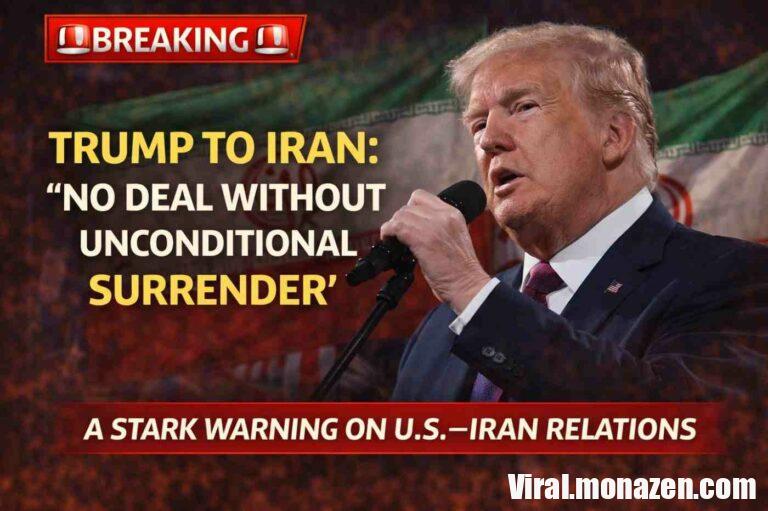
Former U.S. President Donald Trump has once again thrust U.S.–Iran relations into the center of global debate after making striking remarks about the future of negotiations with Tehran. Speaking in a recent address that quickly circulated across international media and social platforms, Trump declared that there would be no agreement with Iran unless it agreed to what he described as “unconditional surrender.”

The statement, widely shared by global news outlets and commentators, reflects the continuation of a tough posture toward the Islamic Republic that defined much of Trump’s foreign policy during his presidency.

At the same time, Trump also suggested that the United States, working alongside allies and partners, could help stabilize Iran’s struggling economy if Tehran were willing to change course. The remarks present a dual message—pressure on one hand and the possibility of economic recovery on the other.

For analysts and diplomats, the comments raise significant questions about the future direction of U.S. policy toward Iran and the broader geopolitical implications for the Middle East.


A Hardline Message

Trump’s statement was blunt.

“There will be no agreement with Iran unless it is unconditional surrender,” he said, according to translated remarks circulating in international media.

The phrase echoes language historically associated with wartime diplomacy and complete capitulation by an adversary. In modern international negotiations, such wording is rarely used, which is why the statement quickly gained attention.

Supporters interpret the message as a demonstration of strength and clarity in foreign policy.

Critics, however, argue that such language may complicate diplomatic efforts aimed at reducing tensions between Washington and Tehran.


The Context: Years of U.S.–Iran Tension

Relations between the United States and Iran have been strained for decades.

The conflict dates back to the 1979 Iranian Revolution, when Iran’s new government severed ties with Washington and seized the U.S. embassy in Tehran during a hostage crisis that lasted 444 days.

Since then, relations have been marked by sanctions, regional conflicts, and ongoing disputes over Iran’s nuclear program.

One of the most significant diplomatic efforts occurred in 2015 with the Joint Comprehensive Plan of Action (JCPOA)—commonly known as the Iran nuclear deal. Under the agreement, Iran limited aspects of its nuclear program in exchange for sanctions relief.

However, during his presidency, Trump withdrew the United States from the deal in 2018, arguing that it failed to address Iran’s missile program and regional influence.

That decision set off a new phase of confrontation between Washington and Tehran.


The “Maximum Pressure” Strategy

Trump’s administration implemented what became known as the “maximum pressure” campaign, imposing sweeping economic sanctions on Iran.

The goal was to force Iran back to the negotiating table under stricter conditions.

Sanctions targeted Iran’s oil exports, banking sector, and access to international markets.

The economic consequences were severe.

Iran’s currency lost significant value, inflation surged, and the country’s economy contracted.

Supporters of the policy argued that economic pressure was necessary to curb Iran’s nuclear ambitions and regional activities.

Opponents warned that sanctions could increase instability while making diplomatic compromise more difficult.


A Promise of Economic Recovery

Despite the strong rhetoric, Trump’s recent remarks also included a notable suggestion: the United States could work with allies to help revive Iran’s economy if Tehran agreed to certain conditions.

According to the statement circulating online, America would collaborate with partners to help pull Iran back from economic collapse and support its recovery.

This dual approach—combining pressure with the possibility of economic relief—is a familiar strategy in international diplomacy.

It mirrors similar approaches used in negotiations with other nations where sanctions and incentives are deployed simultaneously.

Analysts say this approach is designed to create leverage while still leaving room for negotiation.


Reactions from Analysts

Political observers and foreign policy experts quickly weighed in on the statement.

Some analysts argue that the language of “unconditional surrender” may be more symbolic than literal.

In international politics, strong language is often used to signal determination to domestic audiences and political allies.

Others warn that rhetoric can shape diplomatic realities.

“Words matter in diplomacy,” said one foreign policy researcher. “When leaders frame negotiations in terms of surrender, it can harden positions on both sides.”

Still, some experts note that negotiations often begin with extreme positions before evolving into compromise.


The Regional Stakes

Any shift in U.S.–Iran relations carries significant consequences for the Middle East.

Iran plays a major role in regional politics through alliances and proxy groups across countries such as Iraq, Syria, Lebanon, and Yemen.

Tensions between Iran and its regional rivals—particularly Israel and Saudi Arabia—have shaped much of the region’s security landscape.

The United States has long positioned itself as a key security partner for several of these nations.

As a result, American policy toward Iran affects not only bilateral relations but also broader regional stability.


Economic Pressures Inside Iran

Iran’s economy has struggled under years of sanctions and internal economic challenges.

Oil exports, once the backbone of the country’s economy, have faced restrictions due to U.S. sanctions.

At the same time, domestic issues such as inflation, unemployment, and currency volatility have created pressure inside the country.

These economic realities have often influenced Iran’s willingness—or unwillingness—to engage in negotiations with Western governments.

Some analysts believe economic hardship could eventually push Tehran toward diplomatic engagement.

Others argue that pressure alone rarely produces sustainable agreements.


Political Implications in the United States

Trump’s remarks also carry political significance within the United States.

Foreign policy toward Iran has long been a contentious issue in American politics.

Republican leaders have generally supported tougher sanctions and a more confrontational approach.

Many Democrats, while also critical of Iran’s policies, have favored diplomatic agreements such as the nuclear deal.

As debates continue over the future direction of U.S. foreign policy, statements like Trump’s highlight the ideological differences shaping American strategy abroad.


Diplomacy or Confrontation?

Ultimately, the future of U.S.–Iran relations remains uncertain.

Diplomacy has historically moved in cycles—periods of tension followed by attempts at negotiation.

Whether Trump’s remarks represent a negotiating tactic, a firm policy stance, or a political message remains a matter of interpretation.

For now, the statement has succeeded in one clear objective: placing Iran back at the center of global political discussion.


A Complex Road Ahead

International relations rarely unfold in simple or predictable ways.

The relationship between the United States and Iran has been shaped by decades of mistrust, strategic rivalry, and competing visions for the Middle East.

Trump’s latest comments reflect how deeply those tensions remain embedded in global politics.

Whether the future holds confrontation, negotiation, or some mixture of both will depend on diplomatic decisions made in the months and years ahead.

But one thing is certain: any shift in U.S.–Iran relations will carry consequences far beyond the borders of either country.

Leave a Comment

Your email address will not be published. Required fields are marked *

x
Advertisements
Scroll to Top