ADVERTISEMENT

New Poll Shows Strong Support for Donald Trump Among MAGA Republicans

New Poll Shows Strong Support for Donald Trump Among MAGA Republicans A newly released political poll has reignited debate across the United States about the strength of former President Donald Trump’s support within the Republican Party. According to the survey, Trump’s approval rating among voters who identify strongly with the “Make America Great Again” (MAGA) movement remains extremely high, reaching levels that political analysts say reflect one of the most loyal political bases in modern American politics. The poll, which has circulated widely online and across television networks, suggests that Trump continues to command overwhelming backing from core supporters even as broader public opinion remains sharply divided. For political observers, the results highlight a key reality of the current American political landscape: Trump’s influence within the Republican Party remains powerful and deeply rooted, years after his first presidency and amid ongoing national debates about the future direction of U.S. politics. A Poll That Sparked National Discussion Public opinion polls often shape political narratives, and this latest survey has quickly become a focal point of conversation among commentators, campaign strategists, and voters. According to the data, Trump’s approval rating among self-identified MAGA Republicans sits at an extraordinarily high level, reportedly approaching 98 percent support within that specific group. Such numbers are unusual even in modern partisan politics. While presidents and political leaders often enjoy strong backing from their party’s base, approval ratings approaching unanimity are rare in democratic systems where internal factions and policy disagreements are common. The result has therefore sparked intense interest in what it reveals about Trump’s enduring relationship with his supporters. Understanding the MAGA Movement The term MAGA, derived from Trump’s campaign slogan “Make America Great Again,” has evolved over the past decade into more than a political slogan. For many supporters, it represents a broader movement centered on several key themes: Stronger border enforcement Economic nationalism and domestic manufacturing Energy independence Skepticism toward global institutions A populist critique of political elites Trump’s rise to power in 2016 was fueled largely by voters who felt overlooked by traditional political leadership and believed the country needed a more confrontational approach to international trade, immigration, and government bureaucracy. These voters have remained among Trump’s most loyal supporters. Loyalty Within the Republican Base Political scientists note that Trump has reshaped the internal dynamics of the Republican Party. Before his arrival on the national political stage, Republican coalitions often consisted of multiple factions: traditional conservatives, libertarians, business-oriented moderates, and national security hawks. Trump’s brand of populist conservatism unified many of these groups while also bringing new voters into the party—particularly working-class Americans who previously felt disconnected from national politics. As a result, loyalty within Trump’s base has remained remarkably stable even during periods of controversy or political pressure. For many MAGA supporters, Trump represents more than a political figure; he symbolizes a broader challenge to institutions they believe have ignored ordinary citizens. The Gap Between MAGA and Other Republicans One of the most notable aspects of the poll is the reported gap between MAGA Republicans and other voters within the Republican Party. While Trump continues to receive strong support from traditional Republicans, analysts say the intensity of support among MAGA voters is significantly higher. Some surveys suggest differences of 30 points or more between the most committed supporters and more moderate members of the party. This divide highlights the growing influence of populist politics within American conservatism. It also raises questions about how future Republican leaders might navigate the balance between appealing to Trump’s base and expanding the party’s appeal to a broader electorate. The Role of Political Identity Modern American politics is increasingly shaped by identity and affiliation, not just policy preferences. Many voters now view political allegiance as part of their broader cultural identity. Trump’s supporters often describe their backing in terms that go beyond traditional policy debates. They frequently cite qualities such as strength, direct communication, and willingness to confront political opponents as reasons for their loyalty. For critics, however, such devotion can appear unusual or overly personal. For supporters, it reflects confidence in a leader who they believe represents their values. Critics Offer a Different Perspective While Trump’s supporters celebrate the strong approval numbers, critics interpret the same data differently. Some argue that extremely high approval within a political movement may reflect polarization rather than consensus. They point out that Trump’s national approval ratings among the general public remain far more divided. Opponents of the former president often argue that the country needs leadership capable of bridging political divides rather than intensifying them. These contrasting perspectives illustrate the broader ideological divide that continues to shape American politics. Economic Concerns Remain Central Despite strong support within his base, polls also suggest that economic concerns remain a critical factor for many voters. Issues such as inflation, housing costs, healthcare expenses, and wage growth frequently dominate national surveys about voter priorities. Even among committed supporters of political leaders, economic conditions can strongly influence political attitudes. Analysts note that while political loyalty can remain stable, voter concerns about everyday costs often shape electoral outcomes. The Power of Political Movements The MAGA movement has become one of the most influential political forces in the United States. Beyond election campaigns, it has reshaped discussions about trade, immigration, foreign policy, and the role of government. Trump’s supporters often frame the movement as a grassroots uprising against entrenched political institutions. Critics, meanwhile, argue that populist movements can sometimes oversimplify complex policy challenges. Regardless of perspective, the movement’s impact on American politics is undeniable. Looking Ahead As future elections approach, polls like this one will continue to shape political strategy. Candidates seeking to lead the Republican Party must navigate the powerful influence of Trump’s supporters while also addressing the concerns of voters beyond the party’s core base. For Trump himself, the poll reinforces the strength of his political brand among those who remain most loyal to him. The question facing American politics now is not simply whether Trump retains support among his base—polls suggest that he clearly does. The larger question is how that support will translate into future elections and how the broader electorate will respond. A Movement Still Shaping Politics Nearly a decade after Trump first launched his presidential campaign, the political movement built around his leadership continues to shape national debates. Whether admired or criticized, the loyalty displayed by his supporters reflects the profound transformation of the American political landscape. In an era defined by polarization and rapid change, the MAGA movement remains one of the most powerful forces influencing the direction of the Republican Party—and potentially the future of American politics itself.


A newly released political poll has reignited debate across the United States about the strength of former President Donald Trump’s support within the Republican Party. According to the survey, Trump’s approval rating among voters who identify strongly with the “Make America Great Again” (MAGA) movement remains extremely high, reaching levels that political analysts say reflect one of the most loyal political bases in modern American politics.

The poll, which has circulated widely online and across television networks, suggests that Trump continues to command overwhelming backing from core supporters even as broader public opinion remains sharply divided.

For political observers, the results highlight a key reality of the current American political landscape: Trump’s influence within the Republican Party remains powerful and deeply rooted, years after his first presidency and amid ongoing national debates about the future direction of U.S. politics.


A Poll That Sparked National Discussion

Public opinion polls often shape political narratives, and this latest survey has quickly become a focal point of conversation among commentators, campaign strategists, and voters.

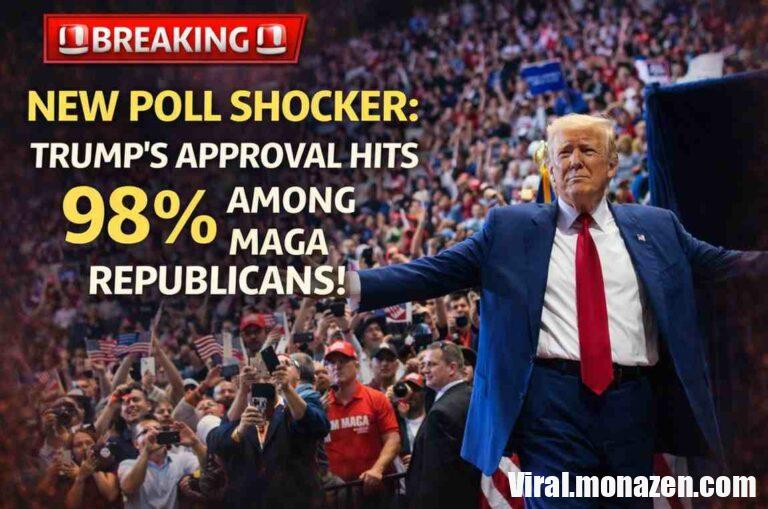
According to the data, Trump’s approval rating among self-identified MAGA Republicans sits at an extraordinarily high level, reportedly approaching 98 percent support within that specific group.

Such numbers are unusual even in modern partisan politics.

While presidents and political leaders often enjoy strong backing from their party’s base, approval ratings approaching unanimity are rare in democratic systems where internal factions and policy disagreements are common.

The result has therefore sparked intense interest in what it reveals about Trump’s enduring relationship with his supporters.


Understanding the MAGA Movement

The term MAGA, derived from Trump’s campaign slogan “Make America Great Again,” has evolved over the past decade into more than a political slogan.

For many supporters, it represents a broader movement centered on several key themes:

  • Stronger border enforcement
  • Economic nationalism and domestic manufacturing
  • Energy independence
  • Skepticism toward global institutions
  • A populist critique of political elites

Trump’s rise to power in 2016 was fueled largely by voters who felt overlooked by traditional political leadership and believed the country needed a more confrontational approach to international trade, immigration, and government bureaucracy.

These voters have remained among Trump’s most loyal supporters.


Loyalty Within the Republican Base

Political scientists note that Trump has reshaped the internal dynamics of the Republican Party.

Before his arrival on the national political stage, Republican coalitions often consisted of multiple factions: traditional conservatives, libertarians, business-oriented moderates, and national security hawks.

Trump’s brand of populist conservatism unified many of these groups while also bringing new voters into the party—particularly working-class Americans who previously felt disconnected from national politics.

As a result, loyalty within Trump’s base has remained remarkably stable even during periods of controversy or political pressure.

For many MAGA supporters, Trump represents more than a political figure; he symbolizes a broader challenge to institutions they believe have ignored ordinary citizens.


The Gap Between MAGA and Other Republicans

One of the most notable aspects of the poll is the reported gap between MAGA Republicans and other voters within the Republican Party.

While Trump continues to receive strong support from traditional Republicans, analysts say the intensity of support among MAGA voters is significantly higher.

Some surveys suggest differences of 30 points or more between the most committed supporters and more moderate members of the party.

This divide highlights the growing influence of populist politics within American conservatism.

It also raises questions about how future Republican leaders might navigate the balance between appealing to Trump’s base and expanding the party’s appeal to a broader electorate.


The Role of Political Identity

Modern American politics is increasingly shaped by identity and affiliation, not just policy preferences.

Many voters now view political allegiance as part of their broader cultural identity.

Trump’s supporters often describe their backing in terms that go beyond traditional policy debates.

They frequently cite qualities such as strength, direct communication, and willingness to confront political opponents as reasons for their loyalty.

For critics, however, such devotion can appear unusual or overly personal.

For supporters, it reflects confidence in a leader who they believe represents their values.


Critics Offer a Different Perspective

While Trump’s supporters celebrate the strong approval numbers, critics interpret the same data differently.

Some argue that extremely high approval within a political movement may reflect polarization rather than consensus.

They point out that Trump’s national approval ratings among the general public remain far more divided.

Opponents of the former president often argue that the country needs leadership capable of bridging political divides rather than intensifying them.

These contrasting perspectives illustrate the broader ideological divide that continues to shape American politics.


Economic Concerns Remain Central

Despite strong support within his base, polls also suggest that economic concerns remain a critical factor for many voters.

Issues such as inflation, housing costs, healthcare expenses, and wage growth frequently dominate national surveys about voter priorities.

Even among committed supporters of political leaders, economic conditions can strongly influence political attitudes.

Analysts note that while political loyalty can remain stable, voter concerns about everyday costs often shape electoral outcomes.


The Power of Political Movements

The MAGA movement has become one of the most influential political forces in the United States.

Beyond election campaigns, it has reshaped discussions about trade, immigration, foreign policy, and the role of government.

Trump’s supporters often frame the movement as a grassroots uprising against entrenched political institutions.

Critics, meanwhile, argue that populist movements can sometimes oversimplify complex policy challenges.

Regardless of perspective, the movement’s impact on American politics is undeniable.


Looking Ahead

As future elections approach, polls like this one will continue to shape political strategy.

Candidates seeking to lead the Republican Party must navigate the powerful influence of Trump’s supporters while also addressing the concerns of voters beyond the party’s core base.

For Trump himself, the poll reinforces the strength of his political brand among those who remain most loyal to him.

The question facing American politics now is not simply whether Trump retains support among his base—polls suggest that he clearly does.

The larger question is how that support will translate into future elections and how the broader electorate will respond.


A Movement Still Shaping Politics

Nearly a decade after Trump first launched his presidential campaign, the political movement built around his leadership continues to shape national debates.

Whether admired or criticized, the loyalty displayed by his supporters reflects the profound transformation of the American political landscape.

In an era defined by polarization and rapid change, the MAGA movement remains one of the most powerful forces influencing the direction of the Republican Party—and potentially the future of American politics itself.

Leave a Comment

Your email address will not be published. Required fields are marked *

x
Advertisements
Scroll to Top