
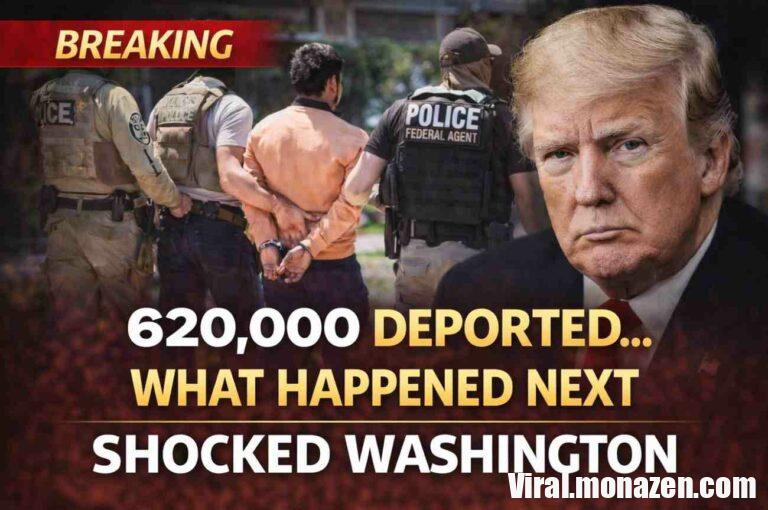
Immigration enforcement has once again become a central point of national debate in the United States, as federal authorities report that more than 620,000 undocumented immigrants have been deported since President Donald Trump took office. The figure reflects a combination of expanded enforcement operations, increased coordination between agencies, and a renewed focus on individuals with final deportation orders.
Supporters of the policy argue the removals demonstrate a commitment to enforcing immigration law and strengthening border security. Critics, however, say the scale and tactics of enforcement raise concerns about due process, humanitarian impacts, and the broader direction of immigration policy in the country.
The numbers highlight how immigration remains one of the most politically charged issues in American politics, touching on questions of national security, economic policy, and the identity of the nation itself.
A Shift Toward Aggressive Enforcement
Federal immigration authorities say the deportations are part of a broader strategy designed to reinforce existing immigration laws and discourage unauthorized entry into the United States.
Officials have emphasized several key priorities in their enforcement strategy. Among them are individuals with criminal records, recent border crossers, and those who have already received final orders of removal from immigration courts.
According to officials familiar with enforcement operations, agencies such as U.S. Immigration and Customs Enforcement (ICE) and Customs and Border Protection (CBP) have expanded their coordination with local law enforcement and federal investigative units.
This cooperation often involves information sharing, joint operations, and targeted arrests aimed at individuals identified through immigration databases.
Authorities also report that workplace enforcement operations have increased, with investigators examining businesses suspected of employing individuals who lack legal authorization to work in the United States.
Immigration Courts and Faster Proceedings
Another factor contributing to the deportation figures has been changes to immigration court procedures.
The backlog of immigration cases has long been a challenge for the U.S. legal system, with hundreds of thousands of cases waiting to be heard. In response, federal authorities have attempted to accelerate certain proceedings, particularly for individuals who have already exhausted their legal appeals.
In many cases, individuals with final deportation orders had remained in the country for years due to delays in enforcement. Officials say the current approach aims to prioritize these cases to reduce the backlog and enforce existing court rulings.
Legal experts note that immigration enforcement is governed by a complex system of administrative courts, appeals processes, and federal law.
“Once someone has received a final order of removal from an immigration judge, the government is legally obligated to enforce that order,” explained one immigration law specialist. “What we are seeing now is a stronger effort to execute those rulings.”
Border Security as a Political Priority
The deportation numbers also reflect the broader immigration agenda of the Trump administration, which has consistently emphasized stricter border controls and tougher enforcement measures.
During both his presidential campaigns and his time in office, Trump has framed immigration policy as a key national security issue. His administration introduced several initiatives aimed at reducing unauthorized crossings and increasing deportations of individuals who remain in the country unlawfully.
Supporters argue that enforcing immigration laws helps protect American workers, reduce crime, and maintain the integrity of the nation’s borders.
Many conservatives say the deportation numbers demonstrate that stronger enforcement can produce measurable results.
“Immigration laws only work if they are enforced,” said one policy analyst who supports stricter border policies. “Otherwise, they become symbolic rather than functional.”
Critics Raise Humanitarian Concerns
Opponents of aggressive immigration enforcement policies argue that deportations on this scale can have significant human consequences.
Immigrant advocacy organizations say many deported individuals have lived in the United States for years, built families, and contributed to local communities. They argue that deportation can separate families and create hardship for children who are U.S. citizens.
Human rights groups also emphasize concerns about conditions in detention centers and the treatment of individuals during immigration proceedings.
Critics argue that immigration enforcement should prioritize serious criminal offenders rather than people whose only violation is entering or remaining in the country without authorization.
“The immigration system is extremely complex,” said one immigration rights advocate. “When enforcement expands too broadly, it risks targeting people who are deeply rooted in American communities.”
Economic and Labor Market Impacts
Immigration enforcement policies can also influence the broader U.S. economy.
Some industries—including agriculture, construction, hospitality, and food processing—rely heavily on immigrant labor. When enforcement increases, employers in these sectors may face labor shortages.
At the same time, supporters of stricter enforcement argue that reducing unauthorized employment can help protect wages and job opportunities for American workers.
Economists note that the impact of deportations on the labor market varies widely depending on the region, industry, and broader economic conditions.
In areas where labor demand is high, employers sometimes struggle to replace workers quickly when enforcement operations occur.
Political Divisions Continue
The issue of deportations remains deeply divisive within American politics.
Republican leaders generally support stronger enforcement measures, arguing that immigration laws must be applied consistently to maintain public confidence in the system.
Many Democrats, however, have advocated for immigration reform that would include pathways to legal status for certain undocumented immigrants, particularly those brought to the United States as children.
Congress has debated comprehensive immigration reform for decades, but deep political divisions have repeatedly prevented major legislation from passing.
As a result, much of the country’s immigration policy continues to be shaped by executive actions and enforcement priorities rather than sweeping legislative reforms.
A Debate Far From Settled
The deportation of more than 620,000 undocumented immigrants since Trump took office illustrates how immigration policy can quickly become a focal point of national discussion.
For supporters, the numbers reflect a government determined to enforce the law and protect national borders.
For critics, they represent a system that may prioritize enforcement over humanitarian considerations.
Regardless of perspective, the debate surrounding immigration enforcement is unlikely to fade anytime soon.
With immigration continuing to influence elections, economic discussions, and social policy debates, the future of U.S. immigration law remains one of the most important and contested issues in American public life.
As policymakers, communities, and voters continue to grapple with these questions, the balance between enforcement, reform, and humanitarian concerns will remain at the center of the national conversation.