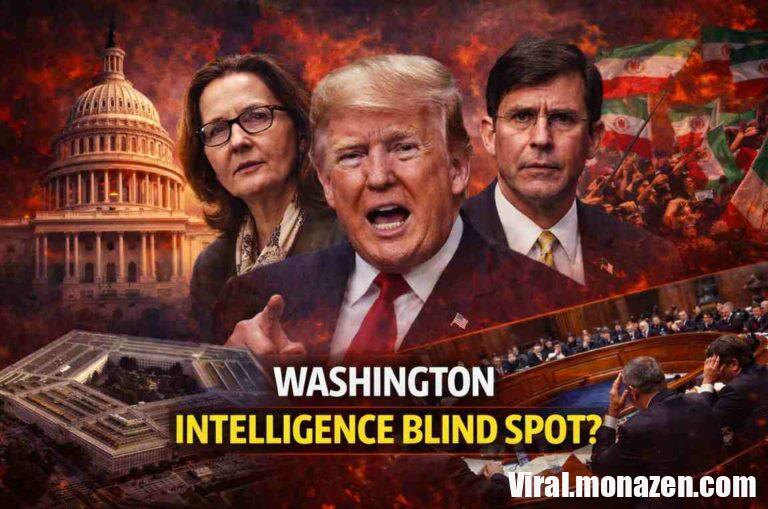
Washington rarely speaks with one voice during moments of international crisis. Yet in recent days, a confidential congressional briefing reportedly triggered a rare wave of bipartisan frustration among lawmakers over the administration’s approach to escalating tensions with Iran.
According to reports circulating in international media and comments from several lawmakers, the private session — attended by senior national security officials — exposed deep disagreements between members of Congress and the executive branch about intelligence assessments, military planning, and the long-term strategy for dealing with Tehran.
While details from closed-door meetings are often limited, the political reaction that followed the briefing has quickly become part of a larger debate in Washington: Did the United States enter a dangerous confrontation without a clearly defined strategy?
A Tense Briefing Behind Closed Doors
The briefing took place in a secure setting on Capitol Hill, where top officials from the defense and intelligence communities presented lawmakers with updates on the situation in the Middle East.
These classified sessions are common during periods of military tension. They allow members of Congress to review intelligence information, ask questions directly to national security leaders, and assess whether military actions align with legal and strategic frameworks.
However, lawmakers emerging from the meeting described the atmosphere as unusually tense.
Several senators and representatives told reporters afterward that the briefing raised more questions than it answered. Some expressed concern about the clarity of the intelligence assessments presented and whether the administration had fully articulated its long-term objectives.
For many lawmakers, the most pressing question was simple: What is the plan moving forward?
Intelligence and the Debate Over “Imminent Threats”
At the heart of the controversy is the issue of intelligence justification.
In U.S. national security doctrine, military action often hinges on the concept of an imminent threat — a situation where evidence suggests an attack is about to occur.
Some lawmakers indicated that the briefing did not provide clear proof that Iran was preparing to launch an immediate strike against U.S. forces or interests.
Critics argue that without such evidence, the rationale for escalation becomes more difficult to defend both legally and politically.
Supporters of the administration, however, maintain that intelligence information is often incomplete and that leaders must sometimes act based on broader strategic assessments rather than a single piece of evidence.
This debate reflects a long-standing challenge in national security decision-making: how to balance precaution with proof.
The Question of Strategy
Another major concern raised by lawmakers involved the overall strategy for dealing with Iran.
Military operations can address immediate threats, but they rarely resolve complex geopolitical conflicts on their own. Without a clear diplomatic or political framework, critics warn that military actions can lead to prolonged instability.
Some members of Congress reportedly pressed officials about whether the United States had a comprehensive plan for the region if tensions continued to escalate.
Questions included:
- How would American forces in the Middle East be protected?
- What steps were being taken to avoid a wider regional conflict?
- And perhaps most importantly, what conditions would mark the end of the confrontation?
Strategic clarity is particularly important in conflicts involving Iran, a country with extensive regional alliances and asymmetric capabilities.
Drones, Missiles, and the Changing Nature of Warfare
One issue discussed during the briefing was the growing role of drones and missile systems in modern conflict.
Over the past decade, Iran has developed an extensive drone program that analysts say has become a key element of its military strategy. These systems allow smaller forces to challenge technologically advanced militaries by launching coordinated attacks at relatively low cost.
Experts note that drones have transformed the dynamics of warfare in several regions, including the Middle East and Eastern Europe.
They can be launched from multiple locations, operate with varying levels of autonomy, and overwhelm traditional air defenses when used in large numbers.
Because of these characteristics, defending against drone attacks has become a central challenge for modern militaries.
Congress and the Limits of Presidential War Powers
The dispute also touches on a longstanding constitutional question in the United States: Who has the authority to start a war?
Under the U.S. Constitution, Congress holds the power to declare war, while the president serves as commander-in-chief of the armed forces.
In practice, however, presidents have often initiated military operations without formal declarations of war. These actions are typically justified under the War Powers Resolution, which allows limited military engagement without congressional approval under certain conditions.
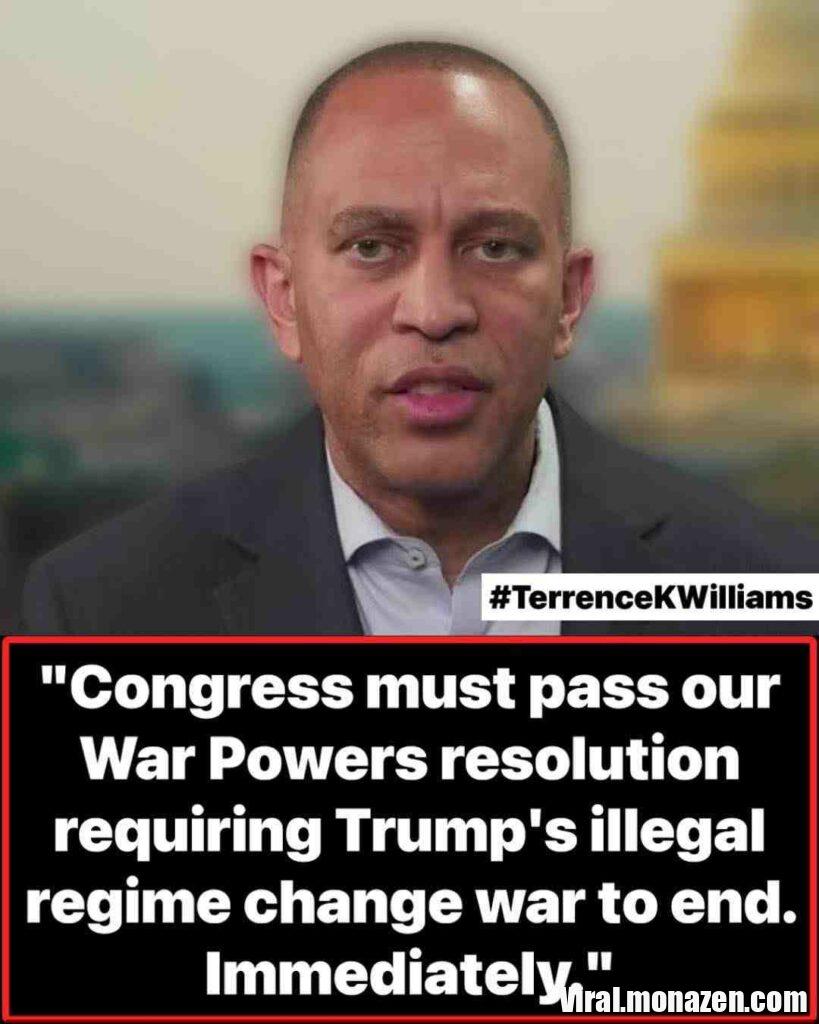
Some lawmakers argue that the current situation with Iran pushes those boundaries too far.
They contend that major military operations should require explicit authorization from Congress to ensure democratic oversight.
Others counter that modern security threats evolve too quickly for lengthy legislative procedures, and that the president must retain flexibility to respond rapidly.
Public Opinion and the Shadow of Past Conflicts
Beyond the halls of Congress, public opinion also plays a role in shaping U.S. foreign policy.
Recent surveys have suggested that Americans remain cautious about entering new large-scale conflicts abroad.
The experiences of the wars in Iraq and Afghanistan continue to influence public attitudes toward military intervention. Many voters are wary of open-ended conflicts that lack clear objectives or exit strategies.
This caution is reflected in the questions lawmakers are asking today.
For elected officials, balancing national security concerns with public sentiment can be politically and strategically complex.
Iran’s Position in the Regional Landscape
From Iran’s perspective, the confrontation with the United States is part of a broader struggle for regional influence.
Iran has long viewed U.S. military presence in the Middle East as a strategic challenge. At the same time, the United States and its allies have expressed concern about Iran’s missile programs, regional partnerships, and nuclear ambitions.
These competing perspectives have produced decades of tension, punctuated by periods of negotiation and confrontation.
The current dispute is only the latest chapter in a relationship marked by deep mistrust.
Diplomacy Versus Escalation
Many foreign policy experts argue that diplomacy remains the most effective path for managing tensions between Washington and Tehran.
Negotiations over Iran’s nuclear program in the past demonstrated that dialogue can produce agreements — though maintaining those agreements has proven difficult.
Critics of escalation warn that military confrontation risks triggering a wider conflict that could destabilize the entire region.
Supporters of a harder stance, however, argue that strong pressure is necessary to deter aggression and maintain regional security.
The challenge for policymakers is finding a balance between these competing approaches.
A Political Storm in Washington
Back in Washington, the fallout from the closed-door briefing continues to reverberate.
Lawmakers from both parties have called for additional hearings, more detailed intelligence briefings, and clearer explanations of the administration’s strategy.
Such scrutiny is a normal part of democratic oversight, but the intensity of the debate underscores how high the stakes have become.
At issue is not only the immediate crisis but also the broader question of how the United States should navigate a rapidly changing geopolitical landscape.
The Road Ahead
As tensions persist, the coming weeks may determine whether the situation moves toward diplomacy or deeper confrontation.
Congressional oversight will likely intensify, with lawmakers demanding more transparency about intelligence assessments and strategic planning.
Meanwhile, regional developments will continue to shape the choices facing policymakers in Washington.
For now, the closed-door briefing has exposed one undeniable reality: in moments of international crisis, unity in Washington can be as fragile as the geopolitical balance abroad.
And as debates continue within the United States government, the broader world will be watching closely — aware that decisions made behind closed doors in Washington can have consequences far beyond its borders.