
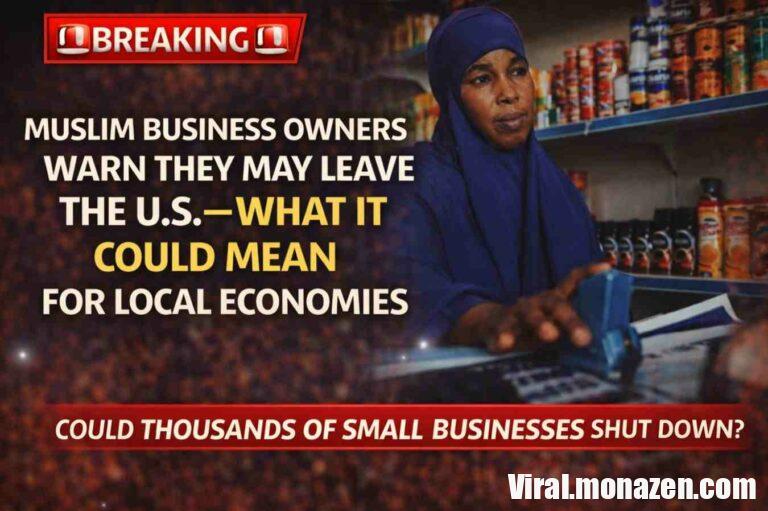
Across many American cities, immigrant-owned small businesses form the backbone of local economies. From corner grocery stores and restaurants to transportation companies and retail shops, these enterprises provide essential services, create jobs, and help sustain neighborhoods. In recent months, however, some Muslim and Somali business owners say they are facing growing concerns about discrimination and social tensions—concerns that have led some to openly question their future in the United States.
In interviews with community leaders and local media outlets, several business owners have said that if what they describe as increasing Islamophobia and social hostility continues, they may consider closing their businesses and relocating to other countries where they feel more secure and welcomed.
While such decisions would likely involve complex personal and financial considerations, the discussions have sparked wider conversations about immigration, economic contribution, community relations, and the future of small business in America.
The Role of Immigrant Businesses in Local Economies
Immigrant entrepreneurs play a significant role in the U.S. economy. According to economic studies, immigrant-owned businesses account for millions of jobs nationwide, particularly in urban neighborhoods where access to services may otherwise be limited.
In many American cities—especially in the Midwest and Northeast—Somali immigrants have built thriving business districts that include grocery stores, clothing shops, cafes, logistics companies, and service businesses.
These businesses often operate long hours and serve diverse customer bases.
Local residents rely on them for everyday necessities, and municipal leaders frequently credit immigrant entrepreneurs with revitalizing commercial corridors that once struggled economically.
As a result, the potential closure of such businesses could have ripple effects across communities.
Concerns About Islamophobia
For some Muslim business owners, recent years have brought heightened anxiety about discrimination and hostility.
Islamophobia—a term used to describe prejudice or discrimination against Muslims—has been the subject of ongoing national debate. Civil rights organizations have documented incidents ranging from harassment to vandalism targeting Muslim communities.
While many Americans strongly reject discrimination of any kind, some Muslim entrepreneurs say they still feel vulnerable.
“Running a business is already difficult,” said one Somali shop owner in a Midwestern city during a recent community discussion. “When you also worry about whether your family or your employees might face hostility, it adds another layer of stress.”
Community advocates say these concerns often arise from a combination of factors, including political rhetoric, misinformation about immigrant communities, and broader global tensions involving Muslim-majority countries.
Economic Contributions Often Overlooked
Many Muslim and Somali entrepreneurs emphasize that their businesses are not only sources of income for their families but also important economic engines for the communities where they operate.
These businesses:
- Provide employment opportunities for local residents
- Generate tax revenue for cities and states
- Support local supply chains
- Offer services in neighborhoods where major retailers may not operate
Economic development experts note that immigrant-owned businesses frequently succeed because they serve community needs that larger companies overlook.
In some cities, entire commercial districts have been revived through immigrant entrepreneurship.
“If these businesses were to close, it wouldn’t just affect the owners,” said one urban development researcher. “It would affect workers, suppliers, customers, and the overall vitality of the neighborhood.”
The Debate Over Leaving
Despite the concerns expressed by some business owners, relocation is not a decision taken lightly.
Many Somali immigrants came to the United States as refugees decades ago, fleeing civil war and political instability in their home country.
For them, America has represented safety, opportunity, and stability.
Relocating would involve significant logistical challenges, including moving families, transferring businesses, and navigating immigration laws in other countries.
Still, some community leaders say discussing the possibility of leaving reflects deeper frustration about feeling misunderstood or marginalized.
“These conversations are less about abandoning the United States and more about expressing the seriousness of the concerns people feel,” said one community organizer.
A Nation Built on Immigration
The United States has long been shaped by immigrants who arrived seeking opportunity, safety, or a new beginning.
From early European settlers to more recent arrivals from Asia, Africa, and Latin America, immigration has played a central role in the country’s economic growth and cultural diversity.
Small businesses run by immigrants are often cited as one of the clearest examples of this impact.
Economists frequently point out that immigrants are more likely to start businesses than native-born citizens, contributing to innovation and job creation.
For many observers, debates about immigration and discrimination are therefore not only social issues but also economic ones.
Community Efforts to Address Tensions
In response to concerns raised by Muslim and Somali business owners, some cities have launched initiatives aimed at strengthening community relations.
These efforts include:
- Interfaith dialogues between religious groups
- Cultural education programs in schools
- Local government partnerships with immigrant entrepreneurs
- Public campaigns promoting inclusion and diversity
Community leaders say these initiatives can help build trust and counter stereotypes that sometimes fuel misunderstanding.
“Most people want to live peacefully and work together,” said a city council member involved in one such program. “When communities engage in honest conversations, it can make a real difference.”
The Broader National Conversation
The discussion about Islamophobia and immigrant entrepreneurship reflects broader debates taking place across the United States.
Issues related to immigration policy, cultural identity, and economic opportunity often intersect in complex ways.
Some Americans argue that the country must continue to embrace its tradition as a welcoming nation of immigrants.
Others emphasize concerns about border security, economic competition, and integration.
These debates frequently become politicized, particularly during election cycles.
However, many community leaders stress that the everyday reality of local neighborhoods is often more cooperative than political rhetoric might suggest.
A Shared Future
Despite the concerns expressed by some Muslim and Somali business owners, many continue to operate their businesses and remain deeply invested in the communities they serve.
For them, the United States remains a place where hard work and entrepreneurship can lead to success.
At the same time, discussions about discrimination and belonging highlight the importance of ongoing dialogue about inclusion and mutual respect.
Economic development experts note that the success of local communities often depends on collaboration between residents of diverse backgrounds.
When businesses thrive and communities feel safe and respected, the benefits extend far beyond individual entrepreneurs.
Looking Ahead
The question of whether some Muslim business owners might ultimately relocate remains uncertain.
What is clear, however, is that their concerns have sparked important conversations about the relationship between immigration, economic contribution, and social acceptance in the United States.
As cities across the country continue to grow and diversify, these conversations will likely remain a central part of the national dialogue.
For many Americans—whether immigrants or native-born—the goal is the same: thriving communities where businesses can grow, families can prosper, and people of different backgrounds can live and work together