
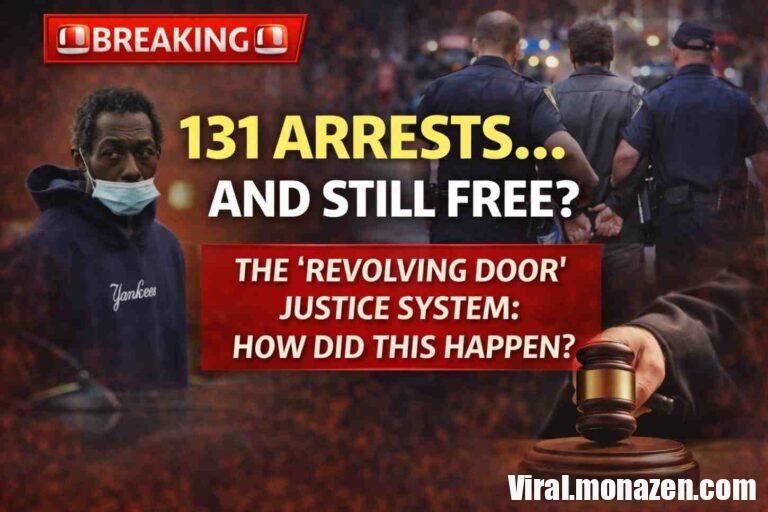
A shocking incident in New York has reignited a familiar and deeply emotional debate across the United States: how should the justice system deal with repeat offenders?
The case involves a man identified as Damon Johnson, who was arrested following an alleged attack in which a sleeping homeless man was set on fire near Penn Station. Authorities say the 37-year-old victim suffered second-degree burns and was hospitalized after the incident.
What has drawn even greater public attention, however, is Johnson’s long history with the criminal justice system. According to reports circulating online, he had dozens of prior arrests before the incident occurred.
The case has quickly become a lightning rod in the ongoing national conversation about crime policy, parole practices, and whether current systems do enough to protect communities from repeat offenders.
The Incident That Sparked Outrage
The alleged attack occurred in a public area near Penn Station, one of the busiest transportation hubs in the United States.
Authorities say the victim, a homeless man who had been sleeping at the time, was suddenly attacked and set on fire.
Emergency responders rushed to the scene after witnesses reported the incident. The victim was transported to a hospital with burn injuries but survived.
Police later arrested a suspect believed to be responsible for the attack.
While the investigation continues, the case has already captured widespread attention because of the suspect’s criminal history and the disturbing nature of the alleged crime.
A Criminal Record Under Scrutiny
Reports about Johnson’s background have circulated widely, with many commentators highlighting the number of previous arrests connected to the suspect.
Although arrest records do not always indicate convictions, the sheer volume of prior encounters with law enforcement has raised questions about how repeat offenders move through the criminal justice system.
For critics of current policies, the case illustrates what they describe as a failure of accountability.
They argue that individuals with lengthy criminal histories should face stricter consequences before they have the opportunity to commit additional crimes.
Supporters of reform efforts, however, caution against drawing broad conclusions from a single case, emphasizing that criminal justice policy must balance punishment with rehabilitation and fairness.
The Role of Parole and Early Release
Central to the debate surrounding the incident is the role of parole, a system that allows incarcerated individuals to serve part of their sentence outside prison under supervision.
Parole programs were originally designed to help people reintegrate into society while still being monitored by authorities.
In theory, the system offers individuals a chance to rebuild their lives after serving time.
However, critics argue that parole and early-release policies can sometimes allow dangerous offenders back into communities before they are ready.
The New York case has intensified scrutiny of how parole decisions are made and whether risk assessments accurately predict future behavior.
Crime Policy in Modern Cities
The incident comes at a time when crime policy has become one of the most politically charged issues in American public life.
Urban centers across the country have been grappling with complex questions about how to address public safety while also pursuing reforms intended to reduce incarceration rates and address inequalities within the justice system.
Some policymakers have supported reforms aimed at reducing prison populations and expanding alternatives to incarceration.
Others argue that such reforms may unintentionally weaken deterrence and allow repeat offenders to remain on the streets.
The tension between these perspectives has become a defining feature of criminal justice debates nationwide.
Public Safety and the Homeless Population
Another aspect of the case that has resonated with many observers is the vulnerability of the victim.
Homeless individuals often face heightened risks of violence due to their exposure in public spaces.
Advocates for the homeless community say incidents like this highlight the need for better protections and services for those living without stable housing.
At the same time, critics argue that broader issues—such as addiction, mental health challenges, and lack of housing resources—make it more difficult for cities to prevent violence involving vulnerable populations.
The Challenge of Repeat Offenders
Repeat offenders have long been one of the most difficult challenges for the criminal justice system.
Some individuals cycle repeatedly through arrests, short jail sentences, and release.
This pattern has led to the concept sometimes referred to as the “revolving door” of the justice system.
Supporters of tougher sentencing laws argue that individuals with repeated offenses should face significantly longer prison terms.
They believe that doing so would both protect communities and deter future crime.
Others argue that focusing solely on punishment may fail to address deeper causes of criminal behavior, including poverty, addiction, and untreated mental illness.
A Divided National Conversation
Cases like the one in New York often become symbolic within broader political debates.
For some observers, the incident represents evidence that the justice system must become stricter when dealing with individuals who repeatedly break the law.
For others, it highlights the complexity of criminal justice reform and the need to examine how systemic factors contribute to crime.
The divide reflects a broader national conversation about how to balance public safety, individual rights, and opportunities for rehabilitation.
Lessons From Past Policy Approaches
Historically, the United States has experimented with multiple approaches to crime policy.
In the 1980s and 1990s, tougher sentencing laws—including “three-strikes” policies—were widely adopted in response to rising crime rates.
These laws significantly increased prison populations.
In more recent years, some states have moved toward reforms designed to reduce incarceration and invest more heavily in prevention programs.
Supporters say these changes can reduce recidivism while lowering costs associated with maintaining large prison systems.
Critics argue that certain reforms may have unintended consequences if they fail to account for high-risk offenders.
The Human Cost of Violence
Amid the policy debates, it is easy to lose sight of the individuals affected by violent crime.
In the New York case, a man sleeping in a public place suffered serious injuries and trauma.
For victims of violent acts, the policy arguments that follow often feel distant compared to the immediate reality of pain, fear, and recovery.
Victim advocacy groups frequently emphasize that discussions about criminal justice reform must always include the voices of those directly harmed by crime.
Searching for Solutions
Experts in criminal justice say that preventing incidents like this requires a combination of strategies.
These may include:
- Improved risk assessment tools for parole decisions
- Expanded mental health and addiction treatment programs
- Stronger support systems for individuals leaving prison
- Increased resources for law enforcement and community safety initiatives
The challenge lies in finding policies that protect communities while also recognizing the complex realities of crime and rehabilitation.
A Continuing Debate
The case involving Damon Johnson has once again placed the spotlight on one of the most difficult questions in public policy: how should society handle repeat offenders?
There are no easy answers.
Some Americans believe tougher penalties are necessary to prevent future crimes.
Others argue that systemic reforms and social programs can address the root causes of criminal behavior.
What is certain is that incidents like this continue to shape public perceptions of safety, justice, and accountability.
As the investigation proceeds and the courts determine the outcome of the case, the broader national conversation about crime and criminal justice will likely continue.
The Bigger Picture
In cities across the country, policymakers, community leaders, and citizens face the same challenge: creating systems that keep people safe while ensuring justice is fair and effective.
Cases that spark national attention often serve as reminders of how complex that task can be.
Behind the headlines and political debates are real lives—both victims seeking justice and communities striving for safety.
And in that reality lies the enduring question at the heart of the American criminal justice system:
How can society protect the public while also ensuring that justice remains balanced, humane, and effective?