
ADVERTISEMENT

When Memorials Become Targets: The Controversy Surrounding the Vandalism of Iryna Zarutska Murals

When Memorials Become Targets: The Controversy Surrounding the Vandalism of Iryna Zarutska Murals Public murals often serve as powerful reminders of lives lost and stories that communities refuse to forget. Painted on walls, bridges, and city streets, they transform public spaces into places of reflection and remembrance. But when those murals are vandalized, the damage goes far beyond paint and brick. It touches on grief, politics, and the deeply personal ways communities process tragedy. That is the controversy now surrounding the repeated vandalism of murals honoring Iryna Zarutska, a young Ukrainian refugee whose death shocked the community where she had hoped to build a new life. The murals, meant as tributes to her memory, have become the center of an emotional and politically charged debate. Each act of vandalism has sparked anger among supporters, condemnation from community leaders, and renewed conversations about crime, immigration, and the cultural battles playing out in American cities. A Life Cut Short For many people who knew her story, Iryna Zarutska represented hope. She had fled Ukraine seeking safety and opportunity, part of a wave of people displaced by war and instability in Eastern Europe. Like many refugees arriving in new countries, she carried with her both trauma from the past and dreams for the future. Friends described her as warm, optimistic, and eager to build a life in a place where she believed opportunity existed. But her life was tragically cut short in a violent incident that drew attention from local media and community organizations. Details surrounding the case have circulated widely online, often becoming entangled in broader political narratives about crime and public safety. In the wake of her death, artists and community members came together to paint murals honoring her memory. These murals were meant not only to commemorate a young woman’s life but also to symbolize solidarity with refugees and victims of violence. The Murals That Sparked a Movement The first mural appeared on the side of a brick building, featuring a soft portrait of Iryna against a backdrop of pastel colors. The artwork captured her gentle smile and included a short inscription commemorating her life. Soon after, additional murals appeared in nearby neighborhoods. Each one told the same story: a young woman remembered not as a headline but as a person whose life mattered. Local residents gathered at the sites to leave flowers, candles, and messages. For many, the murals became a place of quiet reflection. But almost as quickly as they appeared, the tributes began to attract unwanted attention. Vandalism and Public Outrage Within weeks, the murals were defaced with spray paint and graffiti. Some vandals splattered dark paint across the portraits. Others scrawled words and symbols across the walls. The damage sparked immediate outrage among community members who viewed the acts as attacks on a memorial to a victim of violence. Volunteers rushed to clean and restore the artwork. Artists repainted damaged sections, sometimes overnight. Yet the vandalism continued. Each new act fueled emotional reactions online and intensified the debate surrounding the murals. A Symbol in a Broader Political Debate As images of the vandalized murals spread on social media, the story quickly moved beyond the local community. Political commentators and activists from across the ideological spectrum began discussing the incident. For some, the vandalism represented disrespect toward a victim and a troubling sign of hostility toward memorials honoring certain individuals. Others argued that murals and memorials often become political symbols in broader debates about social justice, immigration, and crime policy. In modern media culture, individual tragedies can quickly become symbols within larger ideological battles. The story of Iryna Zarutska was no exception. The Role of Public Art in Memory Public art has long played a role in shaping collective memory. From war memorials to murals honoring civil rights leaders, artistic tributes help communities remember events that might otherwise fade from public consciousness. Murals are particularly powerful because they exist in shared spaces. Unlike monuments placed in museums or parks, murals appear in everyday places—on street corners, building walls, and neighborhood blocks. They become part of daily life. When such artwork is vandalized, the act often feels like an attempt to erase the memory it represents. Why Memorials Become Targets Experts in urban art and public memory say vandalism of memorial murals is not uncommon. Sometimes the motive is simple destruction or mischief. Other times the act carries deeper symbolic meaning. Murals often represent ideas or identities that provoke strong reactions. In polarized political climates, they can become lightning rods for controversy. The vandalism of memorial art therefore raises complicated questions about freedom of expression, respect for victims, and the responsibilities of communities to protect shared spaces. Community Responses Despite repeated acts of vandalism, many local residents have remained committed to preserving the murals. Community groups have organized clean-up events and art restoration efforts. Some residents say the vandalism has only strengthened their determination to keep Iryna’s memory alive. Artists involved in repainting the murals describe the work as both emotional and meaningful. Each restoration becomes a symbolic act of defiance against attempts to erase the tribute. Local leaders have also condemned the vandalism and encouraged respect for memorial spaces. The Power of Memory Stories like that of Iryna Zarutska often resonate because they touch on universal themes: loss, remembrance, and the desire for justice. Memorials serve as reminders that behind every news headline lies a human life with family, friends, and dreams. Even when controversy surrounds the circumstances of a tragedy, communities frequently unite around the shared belief that victims deserve dignity and remembrance. Public art becomes one way of expressing that belief. A Continuing Conversation The vandalism of Iryna Zarutska’s murals highlights the complex intersection of grief, politics, and public expression. Some see the attacks as a reflection of deeper social tensions. Others view them simply as acts of disrespect against a tribute meant to honor a young life lost too soon. What remains clear is that the murals have become more than artwork. They represent a continuing conversation about how communities remember tragedy, how political narratives shape public perception, and how societies balance freedom of expression with respect for memorials. Remembering the Person Behind the Debate Amid all the arguments and headlines, it is easy to forget the central figure in the story. Before the murals, before the debates, there was a young woman named Iryna Zarutska. She had hopes, ambitions, and people who cared deeply about her. The murals were created to ensure that her life would not be forgotten. Whether restored, repainted, or eventually replaced, the images serve as reminders of the fragile line between memory and erasure. And for those who continue to gather beneath them, the message remains simple: A life was lost. A community remembers.
Public murals often serve as powerful reminders of lives lost and stories that communities refuse to forget. Painted on walls, bridges, and city streets, they transform public spaces into places of reflection and remembrance. But when those murals are vandalized, the damage goes far beyond paint and brick. It touches on grief, politics, and the deeply personal ways communities process tragedy.

That is the controversy now surrounding the repeated vandalism of murals honoring Iryna Zarutska, a young Ukrainian refugee whose death shocked the community where she had hoped to build a new life.

The murals, meant as tributes to her memory, have become the center of an emotional and politically charged debate. Each act of vandalism has sparked anger among supporters, condemnation from community leaders, and renewed conversations about crime, immigration, and the cultural battles playing out in American cities.


A Life Cut Short

For many people who knew her story, Iryna Zarutska represented hope.

She had fled Ukraine seeking safety and opportunity, part of a wave of people displaced by war and instability in Eastern Europe. Like many refugees arriving in new countries, she carried with her both trauma from the past and dreams for the future.

Friends described her as warm, optimistic, and eager to build a life in a place where she believed opportunity existed.

But her life was tragically cut short in a violent incident that drew attention from local media and community organizations. Details surrounding the case have circulated widely online, often becoming entangled in broader political narratives about crime and public safety.

In the wake of her death, artists and community members came together to paint murals honoring her memory.

These murals were meant not only to commemorate a young woman’s life but also to symbolize solidarity with refugees and victims of violence.


The Murals That Sparked a Movement

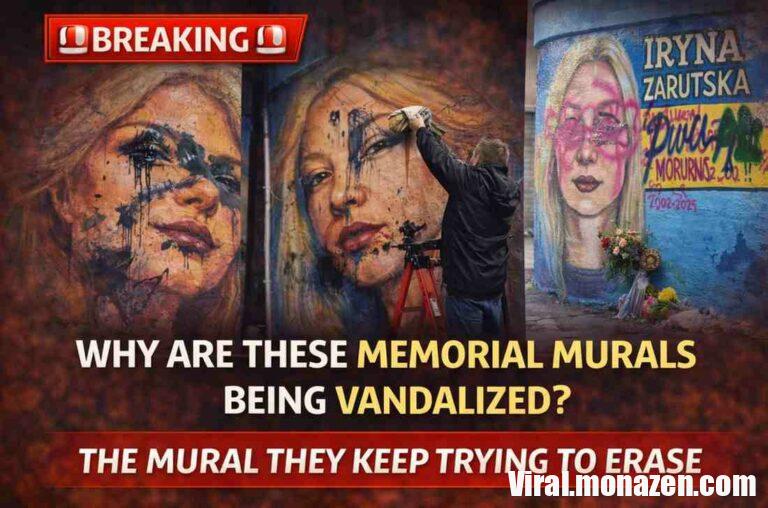
The first mural appeared on the side of a brick building, featuring a soft portrait of Iryna against a backdrop of pastel colors. The artwork captured her gentle smile and included a short inscription commemorating her life.

Soon after, additional murals appeared in nearby neighborhoods.

Each one told the same story: a young woman remembered not as a headline but as a person whose life mattered.

Local residents gathered at the sites to leave flowers, candles, and messages.

For many, the murals became a place of quiet reflection.

But almost as quickly as they appeared, the tributes began to attract unwanted attention.


Vandalism and Public Outrage

Within weeks, the murals were defaced with spray paint and graffiti.

Some vandals splattered dark paint across the portraits. Others scrawled words and symbols across the walls.

The damage sparked immediate outrage among community members who viewed the acts as attacks on a memorial to a victim of violence.

Volunteers rushed to clean and restore the artwork.

Artists repainted damaged sections, sometimes overnight.

Yet the vandalism continued.

Each new act fueled emotional reactions online and intensified the debate surrounding the murals.


A Symbol in a Broader Political Debate

As images of the vandalized murals spread on social media, the story quickly moved beyond the local community.

Political commentators and activists from across the ideological spectrum began discussing the incident.

For some, the vandalism represented disrespect toward a victim and a troubling sign of hostility toward memorials honoring certain individuals.

Others argued that murals and memorials often become political symbols in broader debates about social justice, immigration, and crime policy.

In modern media culture, individual tragedies can quickly become symbols within larger ideological battles.

The story of Iryna Zarutska was no exception.


The Role of Public Art in Memory

Public art has long played a role in shaping collective memory.

From war memorials to murals honoring civil rights leaders, artistic tributes help communities remember events that might otherwise fade from public consciousness.

Murals are particularly powerful because they exist in shared spaces.

Unlike monuments placed in museums or parks, murals appear in everyday places—on street corners, building walls, and neighborhood blocks.

They become part of daily life.

When such artwork is vandalized, the act often feels like an attempt to erase the memory it represents.


Why Memorials Become Targets

Experts in urban art and public memory say vandalism of memorial murals is not uncommon.

Sometimes the motive is simple destruction or mischief.

Other times the act carries deeper symbolic meaning.

Murals often represent ideas or identities that provoke strong reactions.

In polarized political climates, they can become lightning rods for controversy.

The vandalism of memorial art therefore raises complicated questions about freedom of expression, respect for victims, and the responsibilities of communities to protect shared spaces.


Community Responses

Despite repeated acts of vandalism, many local residents have remained committed to preserving the murals.

Community groups have organized clean-up events and art restoration efforts.

Some residents say the vandalism has only strengthened their determination to keep Iryna’s memory alive.

Artists involved in repainting the murals describe the work as both emotional and meaningful.

Each restoration becomes a symbolic act of defiance against attempts to erase the tribute.

Local leaders have also condemned the vandalism and encouraged respect for memorial spaces.


The Power of Memory

Stories like that of Iryna Zarutska often resonate because they touch on universal themes: loss, remembrance, and the desire for justice.

Memorials serve as reminders that behind every news headline lies a human life with family, friends, and dreams.

Even when controversy surrounds the circumstances of a tragedy, communities frequently unite around the shared belief that victims deserve dignity and remembrance.

Public art becomes one way of expressing that belief.


A Continuing Conversation

The vandalism of Iryna Zarutska’s murals highlights the complex intersection of grief, politics, and public expression.

Some see the attacks as a reflection of deeper social tensions.

Others view them simply as acts of disrespect against a tribute meant to honor a young life lost too soon.

What remains clear is that the murals have become more than artwork.

They represent a continuing conversation about how communities remember tragedy, how political narratives shape public perception, and how societies balance freedom of expression with respect for memorials.


Remembering the Person Behind the Debate

Amid all the arguments and headlines, it is easy to forget the central figure in the story.

Before the murals, before the debates, there was a young woman named Iryna Zarutska.

She had hopes, ambitions, and people who cared deeply about her.

The murals were created to ensure that her life would not be forgotten.

Whether restored, repainted, or eventually replaced, the images serve as reminders of the fragile line between memory and erasure.

And for those who continue to gather beneath them, the message remains simple:

A life was lost.
A community remembers.

Leave a Comment

Your email address will not be published. Required fields are marked *

x
Advertisements
Scroll to Top